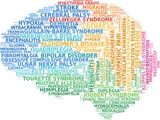
Fields of brain science
Biologists, psychologists, engineers, physicians, data scientists, philosophers and economists all study the brain. Their 120 fields fall into six disciplines.
Neuroscience
The biological science of the nervous system: how it is built, how it develops, how it works and how it fails, at every scale from molecules to behaviour.
32 fields, including Molecular neuroscience, Developmental neuroscience, Systems neuroscience and Computational neuroscience.
Psychology
The science of mind and behaviour: how people perceive, think, feel, learn, remember and act, and how they differ from one another.
22 fields, including Cognitive psychology, Neuropsychology, Developmental psychology and Clinical psychology.
Neuroinformatics
The organisation, sharing, mapping and analysis of brain data, so that results from many laboratories can be combined and compared.
5 fields, including Brain mapping and atlases, Connectomics and Brain simulation.
Neurotechnology
The engineering of tools that record, image, stimulate or imitate the nervous system, for research and for treatment.
10 fields, including Neuroimaging technology, Brain–computer interfaces, Optogenetics and Neuromodulation.
Clinical neurosciences
The medical specialties and subspecialties that diagnose, treat and care for people with disorders of the brain, spinal cord, nerves, muscles and mind.
34 fields, including Neurology, Psychiatry, Neurosurgery and Neuroradiology.
Interdisciplinary fields
Fields where brain science meets the humanities, social sciences and computing, from philosophy and linguistics to economics, law and artificial intelligence.
17 fields, including Cognitive science, Neurolinguistics, Neuroeconomics and NeuroAI.
Six disciplines, 120 fields
Many researchers work in several disciplines at once, and the boundaries between them change over time.
Scales studied by each discipline
The scales run from molecules at the centre of the wheel to whole societies at the rim. Each field is one spoke, which spans the scales the field studies.
All fields
120 fields in six disciplines. Each entry gives the scales the field studies, typical questions, its main methods and, where relevant, related conditions and Nobel Prizes.
Neuroscience32 fields
Molecules and cells
Molecular neuroscienceThe molecules of the nervous system, such as ion channels, receptors, transporters and signalling proteins, and how their structure explains what they do.
Works at the scale of molecules to synapses
Questions it asks
- How does an ion channel open and close?
- How do misfolded proteins such as amyloid beta, tau and alpha-synuclein harm nerve cells?
Main methods
- Structural biology, including cryo-electron microscopy
- Biochemistry
- Recordings from single channels
Nobel Prizes
- 1991Erwin Neher and Bert Sakmann
- 2003Roderick MacKinnon
- 2021David Julius and Ardem Patapoutian
- 1997Stanley Prusiner
NeurochemistryThe chemistry of the nervous system: the neurotransmitters, neuropeptides and other molecules that nerve cells make, release and respond to.
Works at the scale of molecules to synapses
Questions it asks
- How is dopamine made, released and cleared away again?
Cellular neuroscienceHow individual neurons and glial cells are built, how they work and how the many types differ from one another.
Works at the scale of synapses to neurons
Questions it asks
- What makes a Purkinje cell different from a pyramidal neuron?
- How do oligodendrocytes wrap axons in myelin?
Main methods
- Microscopy and cell staining
- Patch-clamp recording
- Cultured cells and neurons grown from stem cells
Nobel Prizes
- 1986Rita Levi-Montalcini and Stanley Cohen
Glial biologyThe non-neuronal cells of the nervous system, astrocytes, oligodendrocytes, microglia and others, and how they support, insulate and defend neurons.
Works at the scale of synapses to circuits
Questions it asks
- How do microglia decide which synapses to remove?
Conditions
NeurogeneticsHow genes build and run the nervous system, and how changes in DNA cause or raise the risk of brain disorders.
Works at the scale of molecules to neurons
Questions it asks
- Which single gene changes cause inherited conditions such as Huntington’s disease?
- How do thousands of small genetic differences add up to the risk of common conditions?
Main methods
- Genome sequencing
- Genome-wide association studies
- Gene editing in cells and animal models
Conditions
Nobel Prizes
- 2017Jeffrey Hall, Michael Rosbash and Michael Young
NeuroepigeneticsChemical marks on DNA and its packaging proteins that switch genes on or off in nerve cells, and how experience can change them.
Works at the scale of molecules to neurons
Questions it asks
- Can early-life stress leave lasting marks on genes in the brain?
Structure, development and evolution
NeuroanatomyThe structure of the nervous system, from the shape of the whole brain down to the finest connections between cells.
Works at the scale of synapses to whole brain
Questions it asks
- How are the regions of the brain connected?
- What does a single synapse look like under the microscope?
Main methods
- Histology and staining
- Light and electron microscopy
- Brain atlases
Conditions
Nobel Prizes
- 1906Camillo Golgi and Santiago Ramón y Cajal
Developmental neuroscienceHow the nervous system forms, from the embryo to adulthood: how nerve cells are born, migrate, connect and are pruned.
Works at the scale of synapses to regions
Questions it asks
- How do newborn neurons find their place in the layers of the cortex?
- Why is the developing brain especially vulnerable to injury?
Main methods
- Studies of model organisms
- Brain organoids
- Imaging of the developing brain
Conditions
Nobel Prizes
- 1986Rita Levi-Montalcini and Stanley Cohen
Neuroscience of ageingHow the nervous system changes across later life, and why some brains stay sharp while others decline.
Works at the scale of synapses to person
Questions it asks
- Which changes in the ageing brain are normal, and which signal disease?
Evolutionary neuroscienceHow nervous systems evolved, and what the brains of different species reveal about the origins of the human brain.
Works at the scale of neurons to person
Questions it asks
- Why did the cerebral cortex expand so much in primates?
PaleoneurobiologyThe evolution of the brain studied from fossil skulls, using casts of the inside of the braincase.
Works at the scale of regions to whole brain
Questions it asks
- What does the braincase of an early human reveal about its brain?
Signals and drugs
NeurophysiologyHow nerve cells generate and transmit electrical signals, and how those signals combine into the rhythms of brain activity.
Works at the scale of synapses to regions
Questions it asks
- How does an action potential travel along an axon?
- What do brain rhythms reveal about sleep and seizures?
Main methods
- Patch-clamp and microelectrode recording
- EEG
- Nerve conduction studies
Nobel Prizes
- 1932Charles Sherrington and Edgar Adrian
- 1944Joseph Erlanger and Herbert Gasser
- 1963John Eccles, Alan Hodgkin and Andrew Huxley
NeuropharmacologyThe chemical messengers of the brain and the medicines that act on them, from how a drug reaches its target to how it changes signalling.
Works at the scale of molecules to synapses
Questions it asks
- How do medicines for depression, psychosis or Parkinson’s disease act on synapses?
- Why do some people respond to a medicine and others do not?
Main methods
- Receptor and transporter studies
- Animal models
- Clinical trials
Nobel Prizes
- 1936Henry Dale and Otto Loewi
- 1970Bernard Katz, Ulf von Euler and Julius Axelrod
- 2000Arvid Carlsson, Paul Greengard and Eric Kandel
- 1977Roger Guillemin and Andrew Schally
NeuropsychopharmacologyHow drugs act on the nervous system to change mood, thought and behaviour, joining pharmacology to psychiatry and psychology.
Works at the scale of molecules to person
Questions it asks
- Why do antidepressants take weeks to work when they act on synapses within hours?
Conditions
Brain and body
NeuroimmunologyHow the immune system and the brain’s own immune and support cells protect the nervous system, and how they can also damage it.
Works at the scale of synapses to circuits
Questions it asks
- Why does the immune system attack myelin in multiple sclerosis?
- How do microglia respond to injury and disease?
Main methods
- Immunology of blood and cerebrospinal fluid
- Tissue and cell studies
- Biomarkers
NeuroendocrinologyHow the brain and the hormone system control each other, through the hypothalamus and pituitary gland, in growth, stress, reproduction and appetite.
Works at the scale of molecules to whole brain
Questions it asks
- How does the hypothalamus turn a stressful event into a surge of cortisol?
Nobel Prizes
- 1977Roger Guillemin and Andrew Schally
NeurovirologyViruses that infect the nervous system, how they enter and spread, and how they cause disease.
Works at the scale of molecules to circuits
Questions it asks
- How does the rabies virus travel along nerves to the brain?
Conditions
ChronobiologyBiological rhythms, above all the roughly 24-hour circadian clock in the brain that times sleep, hormones and metabolism.
Works at the scale of molecules to person
Questions it asks
- How do clock genes keep time inside a single cell?
Nobel Prizes
- 2017Jeffrey Hall, Michael Rosbash and Michael Young
Sleep neuroscienceWhat happens in the brain during sleep, how sleep is controlled, and why it matters for memory, mood and health.
Works at the scale of neurons to person
Questions it asks
- Why do humans dream, and what does deep sleep contribute to memory?
Nutritional neuroscienceHow diet and nutrients affect the development, function and health of the nervous system.
Works at the scale of molecules to person
Questions it asks
- How does iodine or iron deficiency in childhood affect brain development?
Systems and behaviour
Systems neuroscienceHow neurons connect into circuits and systems that control movement, sensation, memory and emotion.
Works at the scale of circuits to whole brain
Questions it asks
- How do the basal ganglia help start a movement?
- How do cells in the brain map the position of the body in space?
Main methods
- Recordings from many neurons at once
- Optogenetics
- Tracing connections between regions
Nobel Prizes
- 1949Walter Rudolf Hess
- 2014John O’Keefe, May-Britt Moser and Edvard Moser
Sensory neuroscienceHow the senses detect light, sound, touch, smell, taste, temperature, balance and pain, and how the brain turns these signals into perception.
Works at the scale of molecules to person
Questions it asks
- How do receptors in the skin sense heat and pressure?
- How does the visual cortex build a picture of the world?
Main methods
- Psychophysics
- Recordings from sensory neurons
- Brain imaging
Nobel Prizes
- 1914Robert Bárány
- 1961Georg von Békésy
- 1967Ragnar Granit, Haldan Keffer Hartline and George Wald
- 1981David Hubel and Torsten Wiesel
- 2004Richard Axel and Linda Buck
- 2021David Julius and Ardem Patapoutian
Motor neuroscienceHow the brain, spinal cord and nerves plan and control movement, from a single reflex to a skilled performance.
Works at the scale of neurons to person
Questions it asks
- How does the cerebellum make movements smooth and accurate?
Nobel Prizes
- 1932Charles Sherrington and Edgar Adrian
Behavioural neuroscienceHow brain and body produce behaviour, studied in people and other animals, in the laboratory and in natural settings, including sleep and daily rhythms.
Works at the scale of circuits to person
Also called biological psychology, physiological psychology or psychobiology.
Questions it asks
- How do internal clocks set the rhythm of sleep and waking?
- How are patterns of animal behaviour organised?
Main methods
- Behavioural experiments
- Animal models
- Observation in natural settings
Conditions
Nobel Prizes
- 1973Karl von Frisch, Konrad Lorenz and Nikolaas Tinbergen
- 2017Jeffrey Hall, Michael Rosbash and Michael Young
- 1949Walter Rudolf Hess
NeuroethologyThe neural basis of natural behaviour in animals, such as birdsong, echolocation in bats and navigation in insects.
Works at the scale of neurons to person
Questions it asks
- How does a songbird learn its song?
Nobel Prizes
- 1973Karl von Frisch, Konrad Lorenz and Nikolaas Tinbergen
Mind
Cognitive neuroscienceThe brain basis of thinking: attention, memory, language, decision-making and awareness.
Works at the scale of regions to person
Questions it asks
- Which networks support remembering a recent event?
- How do the two hemispheres share the work of language?
Main methods
- Functional MRI
- EEG and MEG
- Studies of people with brain lesions
- Behavioural tasks
Nobel Prizes
- 1981Roger Sperry
- 2014John O’Keefe, May-Britt Moser and Edvard Moser
Affective neuroscienceThe brain basis of emotion and motivation: how feelings arise, how they are regulated and how they go wrong.
Works at the scale of regions to person
Questions it asks
- How do the amygdala and prefrontal cortex regulate emotion?
- Which brain systems allow people to understand what others think and feel?
Main methods
- Functional MRI
- Physiological measures such as heart rate and hormones
- Behavioural and social tasks
Conditions
Cultural neuroscienceHow cultural values and practices shape, and are shaped by, the brain, mind and genes.
Works at the scale of regions to society
Questions it asks
- Does reading a different writing system tune the visual brain differently?
Theory
Computational neuroscienceComputer models and simulations of neurons, circuits and behaviour, and the analysis of large brain datasets to test how the brain processes information.
Works at the scale of molecules to person
Questions it asks
- Can a model reproduce how an action potential is generated?
- Which computations does a circuit perform when it recognises a face?
Main methods
- Computer simulation
- Machine learning and data analysis
- Models fitted to recordings
Nobel Prizes
- 1963John Eccles, Alan Hodgkin and Andrew Huxley
Theoretical neuroscienceMathematical theories of how nervous systems work: general principles of coding, learning, memory and network dynamics, often developed alongside computational models.
Works at the scale of molecules to person
Often treated as part of computational neuroscience; here it means the mathematical theory, and computational neuroscience the models and simulations.
Questions it asks
- How can a network of neurons store a memory?
- Why might the brain use so little energy for so much computation?
Main methods
- Mathematics and physics
- Network theory
- Information theory
Nobel Prizes
- 2024John Hopfield and Geoffrey Hinton
NeurophysicsPhysics applied to the nervous system: the physics of nerve signals, and the physical methods, such as MRI and electrical recording, used to study them.
Works at the scale of molecules to whole brain
Questions it asks
- What physical limits set how fast and how far a nerve signal can travel?
Psychology22 fields
Mind and brain
Cognitive psychologyHow people perceive, attend, remember, use language, solve problems and make decisions, studied through careful experiments on behaviour.
Works at the scale of person
Questions it asks
- How many items can working memory hold?
- Why are some memories more easily forgotten than others?
Main methods
- Controlled behavioural experiments
- Reaction-time and accuracy measures
- Computational models of thought
Conditions
NeuropsychologyHow damage or disease in particular brain regions changes thinking and behaviour, and how to assess and support the people affected.
Works at the scale of regions to person
Clinical neuropsychology applies it to the assessment and care of patients.
Questions it asks
- Which abilities are affected after a stroke in the left hemisphere?
- How can memory problems be told apart from normal ageing?
Main methods
- Standardised cognitive tests
- Studies of people with brain injury
- Brain imaging
Nobel Prizes
- 1981Roger Sperry
PsychophysiologyHow mental states show in the body, measured through heart rate, skin conductance, pupil size, breathing and brain waves.
Works at the scale of whole brain to person
Questions it asks
- Does the pupil widen when a task becomes harder?
PsychopharmacologyHow drugs change mood, perception, thought and behaviour, including medicines and substances of misuse.
Works at the scale of synapses to person
Questions it asks
- Why are some substances addictive and others not?
Conditions
PsychoneuroimmunologyHow the mind, the nervous system and the immune system influence one another, for example in stress and illness.
Works at the scale of synapses to person
Questions it asks
- Can long-term stress weaken the immune response?
Conditions
Behavioural geneticsHow genes and environment together shape differences in behaviour, intelligence, personality and mental health, often through studies of twins and families.
Works at the scale of molecules to society
Questions it asks
- How much of the risk of depression is inherited?
Methods and measurement
Experimental psychologyThe study of mind and behaviour through controlled experiments, the method that founded modern psychology.
Works at the scale of person
Questions it asks
- How long does it take to recognise a familiar face?
PsychophysicsPrecise measurement of perception and behaviour: how the strength of a stimulus relates to perception and to the response.
Works at the scale of whole brain to person
Questions it asks
- What is the faintest light a person can see?
- How does attention change what is noticed?
Main methods
- Psychophysical methods
- Eye tracking
- Computer-controlled experiments
Mathematical psychologyMathematical models of perception, memory, learning and decision-making that can be tested against behaviour.
Works at the scale of person
Questions it asks
- Can a simple model predict how quickly and accurately people decide?
PsychometricsThe theory and practice of psychological measurement: designing tests and questionnaires that are reliable and valid.
Works at the scale of person to society
Questions it asks
- Does a memory test measure the same thing in every language?
Conditions
Development, evolution and comparison
Developmental psychologyHow thinking, language, emotion and social skills change across life, from infancy and childhood through adolescence to old age.
Works at the scale of person
Questions it asks
- How do infants learn the sounds of their language?
- How does thinking change in later life?
Main methods
- Long-term studies that follow children over years
- Observation and play-based tasks
Conditions
Comparative psychologyThe behaviour and mental abilities of other animals, compared with each other and with those of humans.
Works at the scale of person
Questions it asks
- Do any other animals recognise themselves in a mirror?
Evolutionary psychologyHow evolution by natural selection may have shaped human thought and behaviour.
Works at the scale of person to society
Questions it asks
- Why are people so quick to detect a threatening face?
People and society
Social psychologyHow people think about, influence and relate to one another, in pairs, groups and societies.
Works at the scale of person to society
Questions it asks
- Why do people conform to a group even when it is plainly wrong?
Personality psychologyThe lasting patterns of thought, feeling and behaviour that make individuals different from one another.
Works at the scale of person
Questions it asks
- How stable is personality across a lifetime?
PsycholinguisticsHow people understand, produce and learn language, from sounds and words to sentences and conversation.
Works at the scale of person
Questions it asks
- How do children pick out words from continuous speech?
Psychology of musicHow people perceive, remember, perform and respond emotionally to music.
Works at the scale of person to society
Questions it asks
- Why does some music give people chills?
Educational psychologyHow people learn, and how teaching, motivation and assessment can help them learn better.
Works at the scale of person to society
Questions it asks
- Does spacing out practice improve long-term learning?
Health and care
Clinical psychologyThe assessment and treatment of mental health difficulties using psychological therapies, and research on how and for whom they work.
Works at the scale of person
Questions it asks
- Which talking therapies help most with depression?
- How can people with psychosis be supported to recover?
Main methods
- Psychological assessment
- Talking therapies such as cognitive behavioural therapy
- Clinical trials
Abnormal psychologyThe study of psychological distress and mental disorder: their patterns, causes and course. Also called psychopathology.
Works at the scale of person
Questions it asks
- What separates ordinary worry from an anxiety disorder?
Conditions
Health psychologyHow thoughts, feelings and behaviour affect physical health and illness, and how to support healthier lives.
Works at the scale of person to society
Questions it asks
- How does living with chronic pain affect mood and sleep?
Conditions
Rehabilitation psychologyPsychological care for people living with injury, illness or disability, helping them adapt and take part in daily life.
Works at the scale of person
Questions it asks
- How can people adjust to life after a spinal cord injury?
Conditions
Neuroinformatics5 fields
Data sharing and standardsDatabases, file formats and agreed standards that let brain data from many laboratories be stored, shared, found and reused.
Works at the scale of molecules to society
Questions it asks
- How can imaging data from different scanners be combined fairly?
- What information must accompany a dataset for others to reuse it?
Main methods
- Shared data formats and metadata
- Public repositories
- Open-source software
Brain mapping and atlasesReference maps of the brain, and the methods that make them, which give every region a name and a location so findings from different studies can be placed in the same space.
Works at the scale of neurons to whole brain
Questions it asks
- Where exactly does one region end and the next begin?
- How do brains differ between individuals and species?
Main methods
- Registration of images to a common template
- Digital atlases
- Cell and gene expression maps
ConnectomicsMapping the connections of the nervous system, from every synapse in a small piece of tissue to the major pathways of the whole brain.
Works at the scale of synapses to whole brain
Questions it asks
- How is each neuron in a circuit connected to the others?
- How do brain networks change in disease?
Main methods
- Electron microscopy of serial sections
- Diffusion MRI tractography
- Network analysis
Conditions
Neuroimaging and signal analysisMethods and software for turning raw brain scans and electrical recordings into reliable measurements.
Works at the scale of circuits to whole brain
Questions it asks
- How can movement in the scanner be corrected?
- How certain is it that a difference between brains is real?
Main methods
- Image processing pipelines
- Statistics
- Machine learning
Brain simulationLarge computer models of part or all of a brain, built from measured cells and connections, to test whether the parts explain the whole.
Works at the scale of molecules to whole brain
Questions it asks
- Can a detailed simulation of a patch of cortex reproduce its real activity?
Neurotechnology10 fields
Recording and imaging
Neural engineeringEngineering methods used to understand, repair, replace or enhance the nervous system, the discipline behind most neurotechnology.
Works at the scale of synapses to person
Questions it asks
- How can an electrode be made small and soft enough to stay in the brain for years?
Neuroimaging technologyScanners and methods that picture the structure, activity and chemistry of the living brain without opening the skull.
Works at the scale of circuits to whole brain
Questions it asks
- Where in the brain has a stroke stopped the blood supply?
- Which regions become active during a task?
Main methods
- MRI and functional MRI
- Diffusion MRI
- PET
- CT
Conditions
Nobel Prizes
- 1979Allan Cormack and Godfrey Hounsfield
- 2003Paul Lauterbur and Peter Mansfield
NanoneuroscienceMaterials and devices at the scale of nanometres used to sense, image or influence nerve cells.
Works at the scale of molecules to neurons
Questions it asks
- Can nanoparticles carry a medicine across the blood–brain barrier?
Stimulation and control
NeuromodulationTreatment that changes nerve activity with electrical, magnetic or chemical stimulation, such as deep brain stimulation, magnetic stimulation through the scalp and spinal cord stimulation.
Works at the scale of circuits to whole brain
Questions it asks
- Can electrical stimulation deep in the brain ease the symptoms of Parkinson’s disease?
Conditions
OptogeneticsA method that makes chosen neurons sensitive to light, so that researchers can switch them on or off with millisecond precision.
Works at the scale of molecules to circuits
Questions it asks
- Which neurons, switched on alone, are enough to bring back a memory?
Nobel Prizes
- 2026Karl Deisseroth, Peter Hegemann and Georg Nagel
ChemogeneticsEngineered receptors that respond only to a designer drug, letting researchers turn chosen neurons up or down for hours.
Works at the scale of molecules to circuits
Questions it asks
- What happens to behaviour when one type of neuron is quietened for a day?
Interfaces and machines
Brain–computer interfacesSystems that read signals from the brain and turn them into commands for a computer, a robotic arm or a speech synthesiser.
Works at the scale of neurons to person
Questions it asks
- Can electrical stimulation deep in the brain ease the symptoms of Parkinson’s disease?
- Can a person control a computer cursor with brain signals?
Main methods
- Implanted electrode arrays
- EEG through the scalp
- Machine-learning decoders
NeuroprostheticsDevices that replace or restore a lost function of the nervous system, such as cochlear implants for hearing.
Works at the scale of neurons to person
Questions it asks
- How does a cochlear implant turn sound into nerve signals?
Neuromorphic engineeringComputer chips and circuits designed to work like networks of neurons, often using far less energy than ordinary processors.
Works at the scale of synapses to circuits
Questions it asks
- Can a chip that computes with spikes recognise patterns as well as a conventional processor?
NeuroroboticsRobots controlled by models of nervous systems, used to test how brains produce behaviour in a real body and world.
Works at the scale of circuits to person
Questions it asks
- Can a model of the insect brain steer a robot home?
Clinical neurosciences34 fields
Neurology and its subspecialties
NeurologyThe medical specialty that diagnoses and treats disorders of the brain, spinal cord, nerves and muscles.
Works at the scale of circuits to person
Questions it asks
- Is this headache migraine or a sign of something more serious?
- Which treatment best controls a person’s seizures?
Main methods
- Clinical examination
- Brain imaging and EEG
- Blood and cerebrospinal fluid tests
- Clinical trials
Conditions
Nobel Prizes
- 1927Julius Wagner-Jauregg
Child neurologyNeurology for infants, children and adolescents, from epilepsy and cerebral palsy to inherited and developmental disorders.
Works at the scale of circuits to person
Questions it asks
- Why do some children with epilepsy outgrow their seizures?
Conditions
Vascular neurologyThe care of stroke and other disorders of the blood vessels of the brain. Also called stroke medicine.
Works at the scale of circuits to whole brain
Questions it asks
- How quickly must a blocked artery be opened to save brain tissue?
Conditions
EpilepsyThe neurological subspecialty devoted to the diagnosis and treatment of seizures and epilepsy. Its specialists are epileptologists.
Works at the scale of neurons to person
Questions it asks
- Where in the brain do a patient’s seizures begin?
Conditions
Clinical neurophysiologyDiagnosis through the electrical activity of the nervous system: EEG, nerve conduction studies, electromyography and evoked potentials.
Works at the scale of neurons to whole brain
Questions it asks
- Is a patient’s weakness caused by the nerve or by the muscle?
Neuromuscular medicineDisorders of the peripheral nerves, the junction between nerve and muscle, and the muscles themselves.
Works at the scale of synapses to person
Questions it asks
- What is damaging the nerves in a person with numb feet?
Conditions
Movement disordersConditions that cause too little, too much or abnormal movement, such as Parkinson’s disease, tremor, dystonia and Huntington’s disease.
Works at the scale of circuits to person
Questions it asks
- How can Parkinson’s disease be told apart from look-alike conditions?
Conditions
Headache medicineThe diagnosis and treatment of migraine and other headache disorders.
Works at the scale of circuits to person
Questions it asks
- Which medicines can prevent migraine attacks?
Conditions
Clinical neuroimmunology and neuro-infectious diseaseThe care of immune and infectious disorders of the nervous system, such as multiple sclerosis, autoimmune encephalitis and meningitis.
Works at the scale of synapses to person
Questions it asks
- Which treatment best prevents new relapses of multiple sclerosis?
Conditions
Behavioural neurology and neuropsychiatryDisorders of memory, language, behaviour and emotion caused by brain disease, such as dementia, brain injury and epilepsy.
Works at the scale of regions to person
Questions it asks
- Is this change in personality the first sign of a dementia?
Geriatric neurologyNeurological care of older adults, who often live with several conditions at once.
Works at the scale of circuits to person
Questions it asks
- How can falls be prevented in an older person with Parkinson’s disease?
Neuro-oncologyThe diagnosis and treatment of tumours of the brain, spinal cord and nerves, and the neurological effects of cancer.
Works at the scale of neurons to whole brain
Questions it asks
- Which brain tumours respond to which treatments?
Autonomic disordersDisorders of the autonomic nervous system, which controls blood pressure, heart rate, digestion, sweating and bladder function without conscious awareness.
Works at the scale of neurons to person
Questions it asks
- Why does a person faint every time they stand up?
Conditions
Neurocritical careIntensive care for life-threatening disorders of the nervous system, such as major stroke, brain haemorrhage, severe injury and prolonged seizures. Neonatal neurocritical care is its branch for newborns.
Works at the scale of regions to person
Questions it asks
- How can swelling of the brain be controlled after a severe injury?
Conditions
Interventional neurologyTreatment of brain and spinal disorders through catheters threaded inside blood vessels, such as removing a clot that causes a stroke.
Works at the scale of regions to whole brain
Also practised by interventional neuroradiologists and neurosurgeons.
Questions it asks
- How far into the brain’s arteries can a clot be safely retrieved?
Conditions
Sleep medicineThe diagnosis and treatment of sleep disorders, such as insomnia, sleep apnoea and narcolepsy.
Works at the scale of whole brain to person
Questions it asks
- What causes the sudden sleep attacks of narcolepsy?
Pain medicineThe assessment and treatment of persistent pain, which often involves changes in the nervous system itself.
Works at the scale of synapses to person
Questions it asks
- Why does pain sometimes continue long after an injury has healed?
Conditions
Brain injury medicineThe care of people after a brain injury, from the first weeks through long-term recovery.
Works at the scale of regions to person
Questions it asks
- When is it safe to return to sport after a concussion?
Conditions
Neurodevelopmental disabilitiesThe care of children with conditions that affect brain development, such as autism, intellectual disability and cerebral palsy.
Works at the scale of regions to person
Questions it asks
- What support helps a young child with autism most?
Conditions
Neuro-ophthalmologyDisorders of vision and eye movement that arise from the optic nerve, the brain and the nerves that move the eyes.
Works at the scale of neurons to whole brain
Questions it asks
- Why has a patient suddenly lost vision in one eye?
Conditions
Neuro-otologyDisorders of hearing and balance that arise in the inner ear, the nerves that serve it and the brain.
Works at the scale of neurons to whole brain
A subspecialty of ear, nose and throat surgery, shared with neurology.
Questions it asks
- Is this dizziness coming from the inner ear or the brain?
Nobel Prizes
- 1914Robert Bárány
Psychiatry and its subspecialties
PsychiatryThe medical specialty that diagnoses and treats mental health conditions, combining medicines, psychological therapies and social support.
Works at the scale of regions to person
Questions it asks
- Which treatment is most likely to help this person’s depression?
- How can psychosis be recognised and treated early?
Main methods
- Clinical interviews and rating scales
- Medicines and psychological therapies
- Clinical trials
Nobel Prizes
- 1949António Egas Moniz
The 1949 prize for leucotomy is now regarded critically; the operation caused serious harm and was abandoned.
Child and adolescent psychiatryMental health care for children and young people, including developmental, emotional and behavioural conditions.
Works at the scale of person
Questions it asks
- How early can depression appear, and how should it be treated in teenagers?
Conditions
Geriatric psychiatryMental health care for older adults, including depression, anxiety and the psychological effects of dementia.
Works at the scale of person
Questions it asks
- How can depression be told apart from early dementia?
Conditions
Addiction psychiatryThe diagnosis and treatment of addiction to alcohol, drugs and behaviours such as gambling.
Works at the scale of synapses to person
Questions it asks
- Why do some people relapse years after stopping a drug?
Forensic psychiatryPsychiatry at the meeting point with law: assessing and caring for people in the justice system.
Works at the scale of person to society
Questions it asks
- Can a person with severe psychosis be held responsible for a crime?
Conditions
Consultation-liaison psychiatryPsychiatric care for people in general hospitals, whose physical and mental illnesses affect one another.
Works at the scale of person
Questions it asks
- How should delirium be prevented in older patients after surgery?
Conditions
Interventional psychiatryPsychiatric treatments delivered to the brain directly, such as electroconvulsive therapy, magnetic stimulation and ketamine.
Works at the scale of circuits to person
Questions it asks
- Why does electroconvulsive therapy relieve severe depression?
Conditions
Computational psychiatryMathematical and computer models of learning and decision-making used to explain and classify mental illness.
Works at the scale of circuits to person
Questions it asks
- Can a learning model show why people with depression respond less to reward?
Conditions
Surgery, imaging and pathology
NeurosurgerySurgical treatment of the brain, spine and nerves, for example removing tumours, relieving pressure from bleeding, epilepsy surgery and implanting stimulators.
Works at the scale of regions to person
Its subspecialties include paediatric, functional and stereotactic, neurovascular, skull-base, spinal and peripheral nerve surgery and surgical neuro-oncology.
Questions it asks
- Can removing a small area of the temporal lobe stop a person’s seizures?
- When should a bleed in the brain be operated on?
Main methods
- Surgery guided by imaging
- Implanted devices
- Recording from the brain during surgery
Conditions
NeuroradiologyThe medical specialty that uses imaging to diagnose disorders of the nervous system, and in its interventional branch treats some of them through blood vessels.
Works at the scale of regions to whole brain
Questions it asks
- Does this scan show bleeding or a blocked artery?
- Can a clot be removed through a catheter?
Main methods
- CT and MRI
- Angiography
- Catheter-based treatment
Nobel Prizes
- 1979Allan Cormack and Godfrey Hounsfield
NeuropathologyThe study of disease in nervous tissue under the microscope, used to confirm diagnoses and to understand how diseases damage the brain.
Works at the scale of synapses to regions
Clinical neuromuscular pathology, the study of nerve and muscle biopsies, is a recognised subspecialty (UCNS).
Questions it asks
- Which abnormal proteins are present in this brain tissue?
- How far has the disease spread through the brain?
Main methods
- Examination of biopsy and post-mortem tissue
- Staining for specific proteins
- Molecular tests
Nobel Prizes
- 1997Stanley Prusiner
Recovery and populations
NeurorehabilitationTherapies that help people recover movement, speech, thinking and independence after injury or illness of the nervous system.
Works at the scale of whole brain to person
Delivered with physiotherapists, occupational therapists and speech and language therapists.
Questions it asks
- Which therapies help most after a stroke?
- How can people with cerebral palsy stay active and independent?
Main methods
- Physiotherapy
- Occupational and speech therapy
- Assistive technology
NeuroepidemiologyHow common neurological disorders are, who develops them, and which risk factors and protective factors explain the difference.
Works at the scale of person to society
Questions it asks
- Why do rates of multiple sclerosis differ between countries?
Conditions
Interdisciplinary fields17 fields
Mind and philosophy
Cognitive scienceThe study of mind and intelligence that brings together psychology, neuroscience, linguistics, philosophy, anthropology and computer science.
Works at the scale of whole brain to society
Questions it asks
- What is a concept, and how is it represented?
- Can the same principles explain thinking in people, animals and machines?
Main methods
- Experiments
- Computational models
- Philosophical analysis
Neurophilosophy and philosophy of mindPhilosophical questions about mind, consciousness, the self and free will, examined in the light of brain science.
Works at the scale of whole brain to society
Questions it asks
- Can brain activity explain conscious experience?
NeuroethicsThe ethical, legal and social questions raised by brain science and neurotechnology, and the brain science of moral judgement.
Works at the scale of person to society
Questions it asks
- Who should have access to a person’s brain data?
- What can brain science reveal about consciousness?
Main methods
- Philosophical and ethical analysis
- Studies of public attitudes
- Policy and law
Nobel Prizes
- 1949António Egas Moniz
The 1949 prize for leucotomy is now regarded critically; the operation caused serious harm and was abandoned.
Language, culture and the past
NeurolinguisticsHow the brain understands and produces language, and how language is affected by brain injury or disease.
NeuroanthropologyHow culture and the brain shape each other across human societies, joining anthropology to neuroscience.
Works at the scale of whole brain to society
Questions it asks
- How do skills such as navigation or literacy reshape the brain in different cultures?
Neuroarchaeology and cognitive archaeologyThe evolution of the human mind traced through archaeological remains such as stone tools, art and burials.
Works at the scale of person to society
Questions it asks
- What does making a stone hand-axe demand of the brain?
NeurohistoryAn approach to history that draws on brain science to understand how people in the past felt, behaved and changed.
Works at the scale of person to society
Questions it asks
- How might new habits, such as reading or coffee drinking, have changed daily experience?
Neuroscience of religionStudies of brain activity during religious and spiritual experience and practice, such as prayer and meditation. Its interpretations remain debated.
Works at the scale of whole brain to society
Questions it asks
- Which brain changes accompany long-term meditation practice?
Arts and the senses
NeuroaestheticsThe brain basis of beauty and of the experience of art, faces, landscapes and design.
Works at the scale of regions to society
Questions it asks
- Which brain regions respond when a painting is judged beautiful?
Neuroscience of musicHow the brain perceives, remembers and produces music, and how musical training changes it.
Works at the scale of regions to person
Questions it asks
- Does learning an instrument change the auditory brain?
NeurogastronomyHow the brain creates flavour from taste, smell, texture and memory.
Works at the scale of circuits to person
Questions it asks
- Why does food taste different when the nose is blocked?
Society, law and economics
NeuroeconomicsHow the brain values options and makes choices, combining economics, psychology and neuroscience.
Works at the scale of regions to society
Questions it asks
- How does the brain weigh a reward now against a larger one later?
- What happens in the brain during a risky decision?
Main methods
- Decision-making tasks
- Functional MRI
- Mathematical models of choice
Consumer neuroscienceBrain and physiological measures used to study how people choose products and respond to brands and advertising. Also called neuromarketing; many of its claims are disputed.
Works at the scale of whole brain to society
Questions it asks
- Do brain responses to an advertisement predict what people later buy?
NeurolawHow brain science bears on law: responsibility, evidence, punishment and the rights of people in the justice system. Neurocriminology is a related field.
Works at the scale of person to society
Questions it asks
- Should a brain scan ever be accepted as evidence in court?
Educational neuroscienceWhat the science of learning and the developing brain can, and cannot yet, offer teaching and education.
Works at the scale of person to society
Questions it asks
- How does sleep help children consolidate what they learn?
- Which popular “brain-based” teaching claims are myths?
Main methods
- Classroom studies
- Developmental imaging
- Cognitive experiments
NeuroergonomicsBrain science applied to work and technology: measuring mental workload, fatigue and attention to design safer systems.
Works at the scale of whole brain to person
Questions it asks
- Can brain signals warn that a pilot is overloaded?
Minds and machines
NeuroAIThe exchange of ideas between brain science and artificial intelligence: brain-inspired learning machines, and AI used to analyse and model brain data.
Works at the scale of neurons to society
Brain science and artificial intelligence learning from each other.
Questions it asks
- What can artificial neural networks reveal about the brain?
- Can machine learning help to read brain scans?
Main methods
- Artificial neural networks
- Comparison of models with brain recordings
- Machine learning on brain data
Nobel Prizes
- 2024John Hopfield and Geoffrey Hinton
Branches of neuroscience by scale
The branches of neuroscience arranged by the scale at which they work, from the whole person to a single molecule.
Branches of neuroscience at this scale
Last updated
Social neuroscienceThe brain systems that allow people to understand, cooperate with and learn from others, and how social life shapes the brain.
Works at the scale of regions to society
Questions it asks
Conditions