Concussion
Concussion is a mild traumatic brain injury caused by a blow or jolt to the head or body that temporarily disturbs how the brain works. Most people recover within a few weeks, but a substantial proportion still have symptoms months later, and repeated injuries are a concern, especially in sport3,8,10.
This information is for education. It is not medical advice and does not replace assessment by a qualified health professional. Anyone concerned about symptoms should consult a doctor; in an emergency, local emergency services should be contacted.
What it is
A traumatic brain injury (TBI) is damage to the brain caused by an outside force, such as a bump, blow or jolt to the head or body10. Concussion is a form of mild TBI, and expert criteria state that the terms concussion and mild TBI may be used interchangeably when brain imaging is normal or not needed2,10.
Concussion can happen in falls, road traffic collisions, sport and assaults, and it may involve either a brief loss of consciousness or simply a sudden change in awareness10. In high-income countries, falls, particularly among older people, cause most brain injuries3.
Most people recover fully within a few weeks, but recovery varies8,10. In a large United States study of people treated at major trauma centres, 53% of those with mild TBI still reported some injury-related limitation in daily life a year later7.
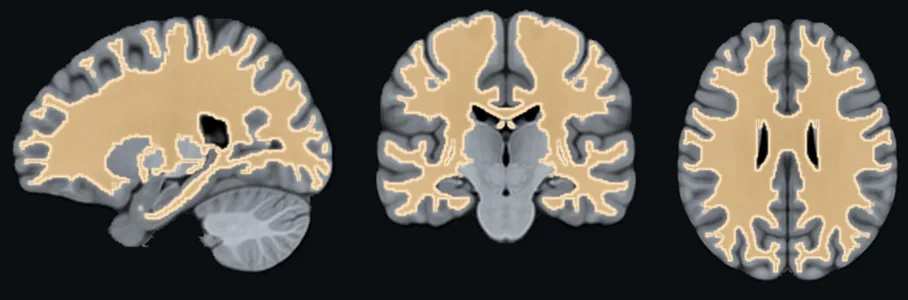
Rapid movement of the brain can stretch and injure axons, the long fibres that make up the white matter10. Diffusion imaging can detect such injury when routine scans are normal3.
Signs and symptoms
Headache, dizziness, confusion and tiredness tend to start soon after the injury, while emotional symptoms such as frustration and irritability often develop during recovery10. Young children may not be able to describe how they feel, so changes in behaviour, feeding or sleep can be important signs10.
- Headache, nausea and feeling dizzy or off-balance10
- A brief loss of consciousness, or feeling dazed, confused or disoriented10
- Problems with memory, concentration or making decisions10
- Blurred vision, sensitivity to light or sound, or ringing in the ears10
- Tiredness and changes in sleep10
- Irritability, mood changes, anxiety or low mood10
Causes and risk factors
Concussion is caused by forces that move the brain rapidly within the skull, either from a direct blow to the head or from a sudden jolt to the body10. Not every blow to the head causes a brain injury10.
- Falls, especially in older people, who often have other health conditions3
- Road traffic incidents, a leading cause in low- and middle-income countries3
- Contact and collision sports1,10
- Blast exposure in military settings10
- Being struck by an object or violently shaken10
- Frailty and alcohol misuse, which are recognised risk factors and targets for prevention3
- A previous concussion, since recovery from a second or third concussion is generally slower10
Genetics
Concussion is an injury, not an inherited condition, so genetics plays only a limited role. Genetic differences may influence how people recover, and genetics is one of several factors being studied to improve predictions of outcome after brain injury3.
What happens in the brain
Rapid movement of the brain inside the skull can stretch and injure nerve fibres (axons), the long projections that carry signals between neurons10. Immediately afterwards there is an abnormal flow of charged particles (ions) across nerve-cell membranes and a release of glutamate, a chemical messenger that excites neurons4.
Restoring the normal balance of ions demands a great deal of energy, producing a temporary period of metabolic crisis in brain cells4. These changes have been linked to typical symptoms such as headache and cognitive problems, and to a period of increased vulnerability to a further injury4.
Standard brain scans are usually normal after concussion, but MRI can show structural damage in up to 30% of people with mild TBI, and advanced techniques such as diffusion tensor imaging can detect injury to white-matter pathways that routine images miss3.
How it is diagnosed
Concussion is diagnosed clinically, from how the injury happened, the symptoms and an examination, because no single test can confirm it2,10. Criteria from the American Congress of Rehabilitation Medicine, developed through expert consensus, aim to standardise diagnosis across sport, civilian and military settings2.
The first priority is to identify the small number of people with bleeding or other serious injury inside the skull. In the United Kingdom, NICE guidance covers the assessment and early management of head injury, including when direct referral to specialist care is needed9.
- Recognition at the scene in sport, using tools such as the Concussion Recognition Tool1
- Structured assessment with tools such as the Sport Concussion Assessment Tool (SCAT6) and, later, office-based follow-up tools1
- The Glasgow Coma Scale, a score of eyes, speech and movement responses; mild TBI is usually defined as a score of 13-153
- CT scanning when warning signs suggest bleeding or other injury inside the skull3
- Blood tests for the brain proteins GFAP and UCH-L1, which can help rule out the need for a CT scan in some adults3,5
- Neuropsychological tests of memory, attention and reaction time, which help track recovery10
How scientists study it
Studies such as TRACK-TBI follow large groups of injured people for a year or more to describe recovery and its predictors3,7.
Multicentre studies showed that combined GFAP and UCH-L1 measurement had high sensitivity for injuries visible on CT, supporting its use to reduce unnecessary scans5.
Diffusion tensor imaging and volume measurements detect subtle injuries that standard images miss3.
Trials compare rehabilitation approaches, such as controlled aerobic exercise versus stretching in adolescents after sport-related concussion6.
Experimental models have mapped the ionic, chemical and metabolic changes that follow concussion and are used to study links with longer-term damage4.
International expert groups review the evidence and update guidance and assessment tools; the sixth such conference was held in Amsterdam in 20221.
Examination of brains after death has identified chronic traumatic encephalopathy (CTE) in some people exposed to repeated head impacts, and research is refining its diagnostic criteria10.
Current treatments
There is no specific treatment that cures concussion; care focuses on relieving symptoms, monitoring for new or worsening problems and a gradual return to normal activity10.
In the first days, rest, avoiding stress, alcohol and recreational drugs, and simple painkillers such as paracetamol for headache are advised8.
Return to work, school and sport should be gradual and only when symptoms allow; the NHS in the United Kingdom advises no contact sport for at least 3 weeks8,10.
In a randomised trial in adolescents, individually prescribed exercise kept below the level that worsened symptoms, started in the first week, shortened recovery compared with stretching; further studies are needed to confirm the benefit in other groups6.
Structured follow-up after mild TBI is considered good practice, yet fewer than 10% of patients discharged from emergency departments in Europe receive it3. People whose symptoms persist may need specialist review and rehabilitation.
Research frontiers
Additional biomarkers and more clinical testing platforms are in development, but results across platforms still need to be harmonised3.
Researchers are combining blood biomarkers, quantitative imaging and, potentially, genetics to identify people at risk of incomplete recovery3.
The possible links between repeated head impacts and later neurodegenerative disease, including CTE, are an active and debated area of research1,10.
International research networks are building ways to analyse data across studies while protecting privacy3.
Living with the condition and seeking help
Emergency help should be sought straight away after a head injury if the person has been knocked out and has not woken, cannot stay awake, has a seizure, has problems with vision or hearing, has clear fluid from the ears or nose, has new weakness or numbness, or has problems with speaking, walking or balance8. Urgent medical advice is recommended for vomiting, dizziness, use of blood-thinning medicines, or alcohol or drug use at the time of injury8. In India, the national emergency number is 112 and the ambulance number is 10811,12.
For a minor head injury, an adult should stay with the injured person for at least the first 24 hours8. People should not drive until fully recovered and should return to work or school only when they feel better8.
Children and teenagers with a sport-related concussion should stop playing immediately and return only after approval from a concussion specialist10. A doctor should be seen if symptoms last longer than 2 weeks or if there is uncertainty about returning to driving, work, school or sport8.
References
- Patricios JS, Schneider KJ, Dvorak J, et al. Consensus statement on concussion in sport: the 6th International Conference on Concussion in Sport-Amsterdam, October 2022. Br J Sports Med. 2023;57:695-711. doi:10.1136/bjsports-2023-106898 · PubMed
- Silverberg ND, Iverson GL; ACRM Brain Injury Special Interest Group Mild TBI Task Force. The American Congress of Rehabilitation Medicine diagnostic criteria for mild traumatic brain injury. Arch Phys Med Rehabil. 2023;104:1343-1355. doi:10.1016/j.apmr.2023.03.036 · PubMed
- Maas AIR, Menon DK, Manley GT, et al. Traumatic brain injury: progress and challenges in prevention, clinical care, and research. Lancet Neurol. 2022;21:1004-1060. doi:10.1016/S1474-4422(22)00309-X · PubMed
- Giza CC, Hovda DA. The new neurometabolic cascade of concussion. Neurosurgery. 2014;75(Suppl 4):S24-S33. doi:10.1227/NEU.0000000000000505 · PubMed
- Bazarian JJ, Biberthaler P, Welch RD, et al. Serum GFAP and UCH-L1 for prediction of absence of intracranial injuries on head CT (ALERT-TBI): a multicentre observational study. Lancet Neurol. 2018;17:782-789. doi:10.1016/S1474-4422(18)30231-X · PubMed
- Leddy JJ, Haider MN, Ellis MJ, et al. Early subthreshold aerobic exercise for sport-related concussion: a randomized clinical trial. JAMA Pediatr. 2019;173:319-325. doi:10.1001/jamapediatrics.2018.4397 · PubMed
- Nelson LD, Temkin NR, Dikmen S, et al. Recovery after mild traumatic brain injury in patients presenting to US level I trauma centers: a TRACK-TBI study. JAMA Neurol. 2019;76:1049-1059. doi:10.1001/jamaneurol.2019.1313 · PubMed
- NHS (United Kingdom). Head injury and concussion. Page last reviewed 29 May 2025. Link
- National Institute for Health and Care Excellence (NICE), United Kingdom. Head injury: assessment and early management. NICE guideline NG232. 2023. Link
- National Institute of Neurological Disorders and Stroke, United States. Traumatic brain injury (TBI). Link
- Press Information Bureau, Government of India (Ministry of Women and Child Development). Panic button becomes available to women with launch of ERSS and pan-India emergency number 112. 19 February 2019. Link
- National Health Mission, Ministry of Health and Family Welfare, Government of India. ERS/Patient Transport Service: National Ambulance Service (Dial 108/102). Accessed October 2026. Link
Prepared 15 October 2026.
Last updated