Alzheimer’s disease
Alzheimer’s disease is a progressive brain disease that gradually damages memory, thinking and the ability to carry out everyday tasks. It is the most common cause of dementia, and as populations age it is one of the largest health and care challenges worldwide.
This information is for education. It is not medical advice and does not replace assessment by a qualified health professional. Anyone concerned about symptoms should consult a doctor; in an emergency, local emergency services should be contacted.
What it is
Dementia is the general term for a decline in memory, thinking and daily functioning, and Alzheimer’s disease is its most common cause1. In most people, the symptoms of Alzheimer’s disease first appear later in life and eventually affect even the simplest tasks3.
In 2021, 57 million people were living with dementia worldwide, with nearly 10 million new cases each year, and dementia is currently the seventh leading cause of death1. The risk rises steeply with age, and around 1 in 20 people with Alzheimer’s disease are under 65, known as young-onset Alzheimer’s disease5.
Brain changes begin many years, often a decade or more, before symptoms appear3,5. For this reason, experts increasingly describe Alzheimer’s disease as a biological process that starts while people are still well and progresses through clinical stages8.
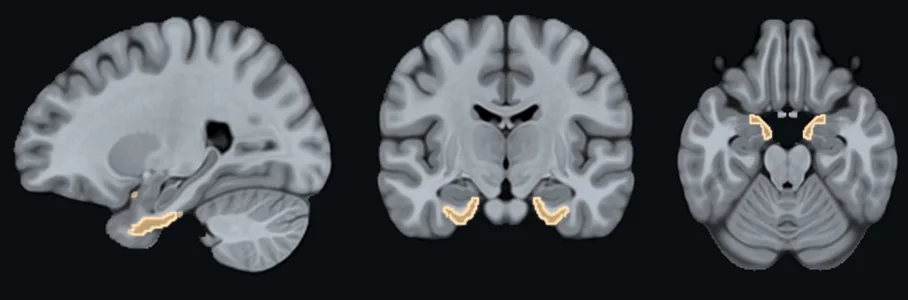
Tau tangles first appear in the transentorhinal and entorhinal cortex on the inner surface of the temporal lobe19.
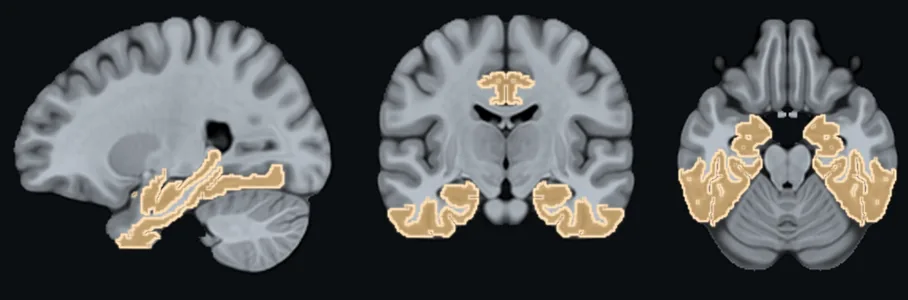
They then extend into limbic areas of the medial and inferior temporal lobe, including the hippocampus, and to the posterior cingulate cortex19,20. Damage here affects the forming of new memories3.
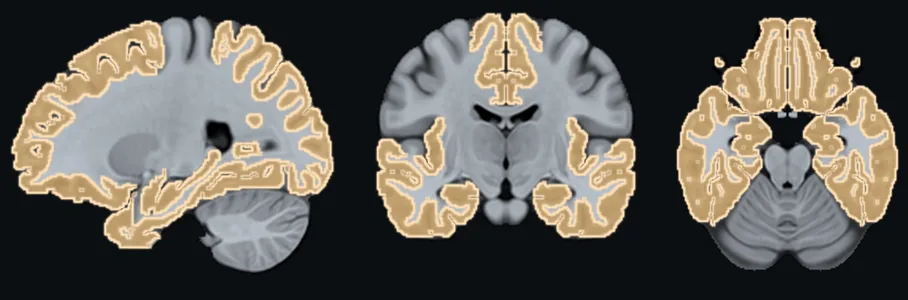
In the late stages almost all association areas of the cortex are affected19. Primary areas for movement, touch, hearing and vision are usually reached last20.
Signs and symptoms
Symptoms develop slowly over several years, and the pace differs between individuals4. Some people first have mild cognitive impairment, in which memory problems are greater than expected for age but do not disrupt everyday life; not everyone with mild cognitive impairment goes on to develop dementia3.
- Early stage: forgetting recent conversations or events, misplacing items, word-finding difficulty, repeating questions and poorer judgement4.
- In less common forms, the first problems may be with vision or language rather than memory5.
- Middle stage: increasing confusion and disorientation, difficulty recognising people, problems with speech and language, disturbed sleep and mood changes4.
- Delusions, hallucinations, agitation or aggression can occur, especially in later stages4.
- Later stage: difficulty eating and swallowing, moving, and controlling bladder and bowel, with a need for full-time care4.
Causes and risk factors
The exact trigger of Alzheimer’s disease is unknown. It is thought to result from a combination of age-related brain changes with genetic, environmental and lifestyle factors3. A 2024 Lancet Commission estimated that about 45% of dementia cases worldwide, of all types, are associated with 14 potentially modifiable risk factors, although this assumes the factors are causal9.
- Age, the single most important risk factor; risk roughly doubles every five years after 655.
- Family history and specific genes5.
- Down’s syndrome, because the extra copy of chromosome 21 carries the APP gene, leading to amyloid build-up3,5.
- Cardiovascular risk factors such as high blood pressure, diabetes, obesity, smoking and high cholesterol1,5.
- Hearing loss, untreated depression, social isolation, physical inactivity, low educational attainment, harmful alcohol use and air pollution1,5.
- Severe head injury may increase risk, although more research is needed5.
Genetics
Heritable factors are estimated to account for 60-80% of the risk of Alzheimer’s disease2. In most cases there is no single genetic cause; instead, many gene variants combine with other factors3. A large genome-wide association study of more than 111,000 cases found 75 risk regions, confirming the involvement of amyloid and tau pathways and highlighting microglia, the brain’s immune cells10.
The strongest common genetic influence is the APOE gene: the APOE e4 form increases risk, whereas the e2 form may be protective3. Carrying APOE e4 does not mean a person will develop the disease, and in the United Kingdom NICE advises against using APOE testing to diagnose it7.
Rarely, an altered copy of one of three genes, APP, PSEN1 or PSEN2, causes the disease directly, usually with onset before 653. Families with several affected relatives, particularly at young ages, may be offered genetic counselling5.
What happens in the brain
The two defining features are amyloid plaques, clumps of a protein fragment called amyloid beta that collect between nerve cells, and neurofibrillary tangles, twisted fibres of a protein called tau inside nerve cells3. The current view is that accumulating amyloid beta drives the spread of tau pathology2.
As the disease progresses, nerve cells stop working, lose their connections (synapses) with each other and die. Damage usually starts in the hippocampus and entorhinal cortex, regions essential for forming memories, and later spreads across the brain, which shrinks markedly3.
Levels of acetylcholine, a chemical messenger important for memory, fall5. Inflammation involving microglia, blood vessel damage and other age-related changes are also thought to contribute3,10.
How it is diagnosed
There is no single simple test. Diagnosis usually begins with a family doctor, who asks about symptoms, checks other aspects of health and the medicines being taken to rule out other causes, and may refer to a memory clinic for specialist assessment6.
- Memory and thinking tests, together with what the person and their family have noticed6.
- Blood tests to rule out other causes of symptoms6.
- Structural brain imaging (CT or MRI) to exclude other causes and help identify the type of dementia7.
- If the diagnosis remains uncertain, FDG-PET (a scan that shows how the brain uses glucose) or analysis of cerebrospinal fluid, the fluid around the brain and spinal cord, for amyloid and tau7.
- Amyloid PET scans and, increasingly, blood tests for phosphorylated tau (especially p-tau217) can detect Alzheimer’s disease brain changes8.
How scientists study it
Imaging allows researchers to watch the build-up and spread of amyloid and tau in the living brain, along with changes in brain structure and function3.
Measures of amyloid and tau in cerebrospinal fluid and blood are used to detect disease early, track it over time and select participants for trials2,8.
Genome-wide association studies in hundreds of thousands of people identify risk genes and pathways, and genetic risk scores are being tested for predicting who will progress10.
Following people over many years and studying body fluids before symptoms start help reveal the earliest steps of the disease and why it mainly affects older adults3.
Genetically modified animals and nerve cells grown from patient stem cells are used to study how amyloid and tau damage neurons and to test potential treatments.
Large randomised placebo-controlled trials test treatments aimed at the underlying disease, such as antibodies that remove amyloid11,12. Hundreds of trials are seeking volunteers, including healthy people3.
Current treatments
There is currently no cure for Alzheimer’s disease, but medicines can temporarily reduce some symptoms, and support helps people and families cope with daily life6.
Donepezil, galantamine and rivastigmine increase levels of acetylcholine and are used in mild to moderate disease and may be continued into later stages6,7. Indian clinical practice guidelines list them, with memantine, as the approved medicines for the cognitive symptoms of Alzheimer’s disease16.
Memantine blocks the effects of excessive glutamate, another chemical messenger, and is used in moderate or severe disease, alone or with an acetylcholinesterase inhibitor6.
Lecanemab and donanemab, given by infusion, clear amyloid from the brain and modestly slowed decline in people with early Alzheimer’s disease over 18 months in trials11,12. They can cause amyloid-related imaging abnormalities, which are swelling or small bleeds in the brain, and their place in care is still debated11,12. In England, NICE’s appraisal of lecanemab was still in development at the time of writing13.
Group cognitive stimulation therapy is recommended for mild to moderate dementia, and cognitive rehabilitation or occupational therapy can help people maintain everyday skills7.
For agitation, aggression or psychosis, non-drug approaches come first; antipsychotic medicines are reserved for severe cases and used for the shortest possible time because of serious side effects6.
Informal carers such as family members provide a large share of dementia care, on average five hours per day, and need practical and emotional support1.
Research frontiers
Plasma biomarkers, especially phosphorylated tau 217, are being introduced to make biological diagnosis simpler and more widely available8.
Treatments targeting tau and inflammation are being tested in clinical trials but remain experimental2.
Multidomain lifestyle-based prevention trials, which address several risk factors at once, suggest cognitive benefits in people at increased risk2, and addressing modifiable risk factors could prevent or delay many dementia cases9.
Polygenic risk scores, which combine the effects of many gene variants, may help identify people at highest risk, in addition to age and APOE status10.
Living with the condition and seeking help
Anyone worried about their memory, or about someone else’s, should see a doctor; memory problems have many causes, including depression, stress and medicines, and some are treatable4. An early diagnosis allows time to plan, to access support and treatment, and to consider joining research studies3,4.
If symptoms get worse suddenly, a doctor should be seen promptly, because infections, delirium or stroke may be responsible and can be treated4. In India, the national emergency number is 112 and the ambulance number is 10817,18. Charities, memory services and carer support groups offer information and help, and carers should look after their own health as well.
References
- World Health Organization. Dementia (fact sheet). Link
- Scheltens P, De Strooper B, Kivipelto M, et al. Alzheimer's disease. Lancet. 2021;397:1577-1590. doi:10.1016/S0140-6736(20)32205-4 · PubMed
- National Institute on Aging (NIA), United States. Alzheimer's disease fact sheet. Link
- NHS (United Kingdom). Symptoms - Alzheimer's disease. Link
- NHS (United Kingdom). Causes - Alzheimer's disease. Link
- NHS (United Kingdom). Alzheimer's disease: diagnosis and treatment. Link
- National Institute for Health and Care Excellence (NICE), United Kingdom. Dementia: assessment, management and support for people living with dementia and their carers (NG97). Recommendations. Link
- Jack CR Jr, Andrews JS, Beach TG, et al. Revised criteria for diagnosis and staging of Alzheimer's disease: Alzheimer's Association Workgroup. Alzheimers Dement. 2024;20:5143-5169. doi:10.1002/alz.13859 · PubMed
- Livingston G, Huntley J, Liu KY, et al. Dementia prevention, intervention, and care: 2024 report of the Lancet standing Commission. Lancet. 2024;404:572-628. doi:10.1016/S0140-6736(24)01296-0 · PubMed
- Bellenguez C, Küçükali F, Jansen IE, et al. New insights into the genetic etiology of Alzheimer's disease and related dementias. Nat Genet. 2022;54:412-436. doi:10.1038/s41588-022-01024-z · PubMed
- van Dyck CH, Swanson CJ, Aisen P, et al. Lecanemab in early Alzheimer's disease. N Engl J Med. 2023;388:9-21. doi:10.1056/NEJMoa2212948 · PubMed
- Sims JR, Zimmer JA, Evans CD, et al. Donanemab in early symptomatic Alzheimer disease: the TRAILBLAZER-ALZ 2 randomized clinical trial. JAMA. 2023;330:512-527. doi:10.1001/jama.2023.13239 · PubMed
- National Institute for Health and Care Excellence (NICE), United Kingdom. Lecanemab for treating mild cognitive impairment or mild dementia caused by Alzheimer's disease [ID4043]. In development (GID-TA11220). Link
- Zhang X, Song W. The role of APP and BACE1 trafficking in APP processing and amyloid-β generation. Alzheimers Res Ther. 2013;5:46. doi:10.1186/alzrt211 · PubMed
- Iqbal K, Liu F, Gong CX, Grundke-Iqbal I. Tau in Alzheimer disease and related tauopathies. Curr Alzheimer Res. 2010;7:656-664. doi:10.2174/156720510793611592 · PubMed
- Shaji KS, Sivakumar PT, Rao GP, Paul N. Clinical practice guidelines for management of dementia. Indian J Psychiatry. 2018;60(Suppl 3):S312-S328. doi:10.4103/0019-5545.224472 · PubMed
- Press Information Bureau, Government of India (Ministry of Women and Child Development). Panic button becomes available to women with launch of ERSS and pan-India emergency number 112. 19 February 2019. Link
- National Health Mission, Ministry of Health and Family Welfare, Government of India. ERS/Patient Transport Service: National Ambulance Service (Dial 108/102). Accessed October 2026. Link
- Braak H, Braak E. Neuropathological stageing of Alzheimer-related changes. Acta Neuropathol. 1991;82:239-259. doi:10.1007/BF00308809 · PubMed
- Schöll M, Lockhart SN, Schonhaut DR, et al. PET imaging of tau deposition in the aging human brain. Neuron. 2016;89:971-982. doi:10.1016/j.neuron.2016.01.028 · PubMed
Prepared 15 October 2026.
Last updated