Huntington’s disease
Huntington’s disease is an inherited condition in which nerve cells in parts of the brain gradually break down, causing involuntary movements and progressive changes in thinking, mood and behaviour. It is caused by an expanded repeat in a single gene, HTT, and each child of an affected parent has a 50% chance of inheriting it1,3.
This information is for education. It is not medical advice and does not replace assessment by a qualified health professional. Anyone concerned about symptoms should consult a doctor; in an emergency, local emergency services should be contacted.
What it is
Huntington’s disease is a neurodegenerative disorder, meaning one in which nerve cells progressively stop working and die1,3.
Symptoms usually start between the ages of 30 and 50, but can begin at any age; a rare juvenile form begins in childhood or adolescence1,2. The condition worsens slowly over many years2.
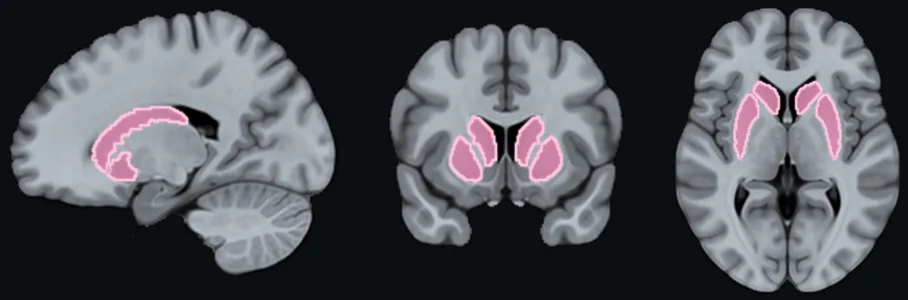
The striatum (caudate and putamen) is particularly vulnerable, and its gradual loss contributes to chorea and to changes in thinking and mood1,3. MRI can measure shrinkage of the caudate years before diagnosis1,9.
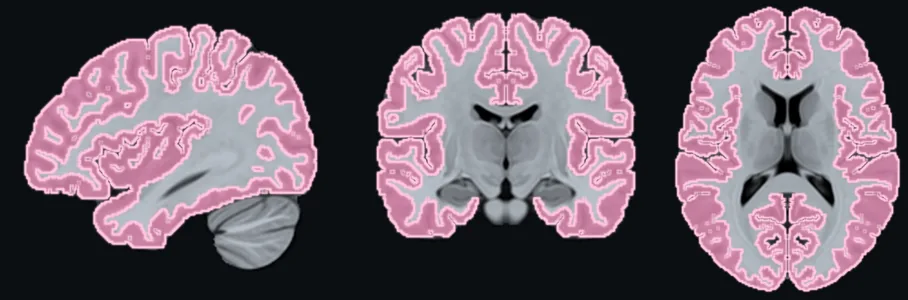
As the disease progresses, other brain regions, including the cortex, are also affected, and scans may show shrinkage1.
Signs and symptoms
Early symptoms vary between people and may include mild clumsiness, difficulty concentrating or planning, and mood changes1,2. Changes in thinking and behaviour can begin years before obvious movement symptoms; measurable brain and behavioural changes have been detected up to 15 years before diagnosis1.
- Chorea: involuntary, jerky or dance-like movements of the face, fingers, feet or body1,2
- Dystonia (sustained muscle contractions causing abnormal postures), stiffness and slowness1
- Problems with balance, walking and falls1
- Difficulty with attention, planning and flexible thinking, progressing in some people to dementia1,2
- Irritability, apathy, depression, anxiety and, in some people, thoughts of suicide or psychosis1
- Slurred speech, difficulty swallowing and weight loss in later stages1,2
Causes and risk factors
Huntington’s disease has a single genetic cause: an expanded stretch of repeated DNA in the HTT gene3,5. It is inherited in an autosomal dominant pattern, which means one altered copy of the gene, from either parent, is enough to cause the condition3. A person who does not inherit the altered gene will not develop the disease and cannot pass it on1.
- Having a parent with Huntington’s disease: each child has a 1 in 2 chance of inheriting the altered gene1,2
- The number of CAG repeats in HTT: 36 or more repeats are associated with the disease1
- Repeats in an intermediate range (27 to 35) are unlikely to cause the disease in that person, but the condition could still be passed on to their children1
- Geographic and ancestral background: prevalence is markedly lower in Asian populations than in European, North American and Australian ones, largely explained by differences in HTT gene haplotypes (inherited blocks of DNA)6
Genetics
The gene responsible, now called HTT, was identified in 1993 on chromosome 4. It contains a repeated sequence of three DNA letters, CAG, that is expanded and unstable in people with the disease5. HTT provides instructions for making a large protein called huntingtin3.
Longer repeats are associated with earlier onset, but repeat length does not fully predict when symptoms begin3. Genome-wide studies of genetic modifiers showed that the length of the uninterrupted CAG sequence, rather than the length of the resulting protein segment, best predicts the age of onset, and that variants in DNA repair genes alter the timing7.
These findings suggest that the CAG repeat keeps expanding within vulnerable brain cells during life, a process called somatic expansion, which may help drive the onset and speed of the disease4,7. Predictive genetic testing is available to adults at risk, ideally with genetic counselling2.
What happens in the brain
The expanded CAG repeat produces huntingtin with an abnormally long stretch of the amino acid glutamine. This mutant protein gains toxic properties, tends to break into fragments and to form clumps, and leads to nerve cell dysfunction and death3.
Mutant huntingtin disrupts many cell processes, including the control of gene activity, mitochondrial energy production and immune function, and the mutant RNA (the gene’s working copy) may itself be harmful4.
The striatum, a deep brain region involved in controlling movement and behaviour, is particularly vulnerable, and its gradual loss contributes to chorea and to changes in thinking and mood1,3. As the disease progresses, other brain regions are also affected, and brain scans may show shrinkage1.
How it is diagnosed
Diagnosis is based on symptoms, neurological examination, family history and a genetic test1. Testing a person with symptoms confirms the diagnosis, while predictive testing in a person without symptoms is a personal choice with major implications, usually offered from age 18 with specialist counselling2.
- Neurological assessment of movement, balance, reflexes, thinking, memory and mood1
- A genetic blood test that counts the CAG repeats in HTT, the most accurate way to confirm the diagnosis1
- Predictive testing for adults at risk who choose it, after genetic counselling2
- Prenatal testing options for people with a family history who are planning a family1
- MRI or CT brain scans, which may show shrinkage of certain areas but can be normal early on1
How scientists study it
Long-term studies of gene carriers without symptoms, such as PREDICT-HD and TRACK-HD, track brain scans, thinking and movement to map the earliest changes1,9.
MRI measures shrinkage of the caudate and other brain regions, and measurable brain changes can be detected years before diagnosis1,9.
Ultrasensitive tests measure mutant huntingtin in cerebrospinal fluid, and neurofilament light protein in blood rises with nerve cell damage and predicts later decline8,9.
Genome-wide studies of thousands of gene carriers identify variants, notably in DNA repair genes, that make onset earlier or later7.
Induced pluripotent stem cells from patients, turned into nerve cells, show repeat-related abnormalities and provide a platform for testing candidate drugs11.
Mouse and other animal models carrying the expanded gene are used to study disease mechanisms and to guide dosing of new treatments before human trials4,12.
The Huntington’s Disease Integrated Staging System classifies people for research from gene carriage through biomarker change to symptoms and loss of function, allowing trials earlier in the disease10.
Current treatments
No current treatment stops or reverses Huntington’s disease; treatment aims to relieve symptoms and support function and quality of life1,3.
Tetrabenazine, deutetrabenazine and valbenazine reduce chorea by depleting monoamines, a group of chemical messengers that includes dopamine; tetrabenazine reduced chorea compared with placebo in a randomised trial, but these medicines require careful monitoring of mood1,13.
Medicines such as risperidone and olanzapine may reduce chorea and treat severe irritability or psychosis, with monitoring for side effects1.
Depression, anxiety and other psychiatric symptoms are treated with medicines and psychological support1.
Physiotherapy, occupational therapy and speech and language therapy help with movement, daily activities, communication and swallowing2.
Research frontiers
An antisense oligonucleotide, a short synthetic strand of genetic material injected into the spinal fluid, reduced mutant huntingtin in cerebrospinal fluid in a first trial in people with early disease12. Larger trials of this and other huntingtin-lowering approaches followed4; these remain experimental, and no treatment has yet been shown to stop or reverse the disease1.
Because ongoing CAG repeat expansion in brain cells appears to influence disease onset, researchers are exploring ways to slow it, for example by modulating DNA repair4,7.
Living with the condition and seeking help
Huntington’s disease affects whole families, and decisions about genetic testing, work, driving and having children can be difficult. Genetic counselling and specialist Huntington’s disease services can help people make informed choices at their own pace2.
Most people live for many years after symptoms begin and will eventually need support with daily living2. National Huntington’s disease associations provide information and support for patients and carers.
Thoughts of suicide can occur in Huntington’s disease1; anyone with such thoughts, or with choking, chest infections or sudden severe changes in behaviour, should seek urgent medical help. In India, emergency help is available on 11216, and Tele-MANAS, the national tele-mental health service, offers free support at all hours on 1441617.
References
- National Institute of Neurological Disorders and Stroke, United States. Huntington's disease. Link
- NHS (United Kingdom). Huntington's disease. Link
- Bates GP, Dorsey R, Gusella JF, et al. Huntington disease. Nat Rev Dis Primers. 2015;1:15005. doi:10.1038/nrdp.2015.5 · PubMed
- Tabrizi SJ, Flower MD, Ross CA, Wild EJ. Huntington disease: new insights into molecular pathogenesis and therapeutic opportunities. Nat Rev Neurol. 2020;16:529-546. doi:10.1038/s41582-020-0389-4 · PubMed
- The Huntington's Disease Collaborative Research Group. A novel gene containing a trinucleotide repeat that is expanded and unstable on Huntington's disease chromosomes. Cell. 1993;72:971-983. doi:10.1016/0092-8674(93)90585-e · PubMed
- Pringsheim T, Wiltshire K, Day L, et al. The incidence and prevalence of Huntington's disease: a systematic review and meta-analysis. Mov Disord. 2012;27:1083-1091. doi:10.1002/mds.25075 · PubMed
- Genetic Modifiers of Huntington's Disease (GeM-HD) Consortium. CAG repeat not polyglutamine length determines timing of Huntington's disease onset. Cell. 2019;178:887-900. doi:10.1016/j.cell.2019.06.036 · PubMed
- Wild EJ, Boggio R, Langbehn D, et al. Quantification of mutant huntingtin protein in cerebrospinal fluid from Huntington's disease patients. J Clin Invest. 2015;125:1979-1986. doi:10.1172/JCI80743 · PubMed
- Byrne LM, Rodrigues FB, Blennow K, et al. Neurofilament light protein in blood as a potential biomarker of neurodegeneration in Huntington's disease: a retrospective cohort analysis. Lancet Neurol. 2017;16:601-609. doi:10.1016/S1474-4422(17)30124-2 · PubMed
- Tabrizi SJ, Schobel S, Gantman EC, et al. A biological classification of Huntington's disease: the Integrated Staging System. Lancet Neurol. 2022;21:632-644. doi:10.1016/S1474-4422(22)00120-X · PubMed
- HD iPSC Consortium. Induced pluripotent stem cells from patients with Huntington's disease show CAG-repeat-expansion-associated phenotypes. Cell Stem Cell. 2012;11:264-278. doi:10.1016/j.stem.2012.04.027 · PubMed
- Tabrizi SJ, Leavitt BR, Landwehrmeyer GB, et al. Targeting huntingtin expression in patients with Huntington's disease. N Engl J Med. 2019;380:2307-2316. doi:10.1056/NEJMoa1900907 · PubMed
- Huntington Study Group. Tetrabenazine as antichorea therapy in Huntington disease: a randomized controlled trial. Neurology. 2006;66:366-372. doi:10.1212/01.wnl.0000198586.85250.13 · PubMed
- DiFiglia M, Sapp E, Chase KO, et al. Aggregation of huntingtin in neuronal intranuclear inclusions and dystrophic neurites in brain. Science. 1997;277:1990-1993. doi:10.1126/science.277.5334.1990 · PubMed
- Creus-Muncunill J, Ehrlich ME. Cell-autonomous and non-cell-autonomous pathogenic mechanisms in Huntington's disease: insights from in vitro and in vivo models. Neurotherapeutics. 2019;16:957-978. doi:10.1007/s13311-019-00782-9 · PubMed
- Press Information Bureau, Government of India (Ministry of Women and Child Development). Panic button becomes available to women with launch of ERSS and pan-India emergency number 112. 19 February 2019. Link
- Press Information Bureau, Government of India (Ministry of Health and Family Welfare). Update on National Tele Mental Health Programme (NTMHP). 4 April 2025. Link
Prepared 15 October 2026.
Last updated