Migraine
Migraine is a common, long-term brain disorder that causes repeated attacks of moderate or severe headache, often with nausea and sensitivity to light and sound. It is one of the leading causes of disability worldwide, particularly in working-age women, yet it is frequently under-recognised and under-treated.
This information is for education. It is not medical advice and does not replace assessment by a qualified health professional. Anyone concerned about symptoms should consult a doctor; in an emergency, local emergency services should be contacted.
What it is
Migraine is a primary headache disorder, meaning the headache is the condition itself rather than a sign of another illness. It is characterised by recurring attacks that are often lifelong, usually last 4 to 72 hours and are accompanied by nausea, vomiting, or sensitivity to light (photophobia) and sound (phonophobia)1.
An estimated 1.04 billion people had migraine in 2016, and because of its high disability weight it caused far more years lived with disability than the more common tension-type headache2. Migraine most often begins around puberty and is more common in women, possibly because of hormonal influences1.
Doctors distinguish migraine without aura, the most common type, from migraine with aura, in which attacks are preceded or accompanied by temporary visual, sensory or speech disturbances7. When headache occurs on 15 or more days a month for more than three months, it is called chronic migraine7.
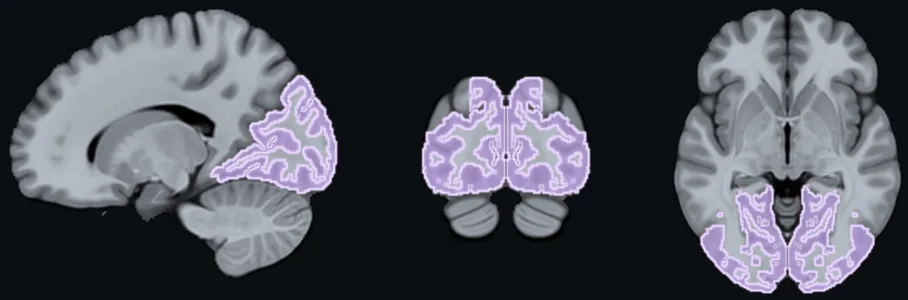
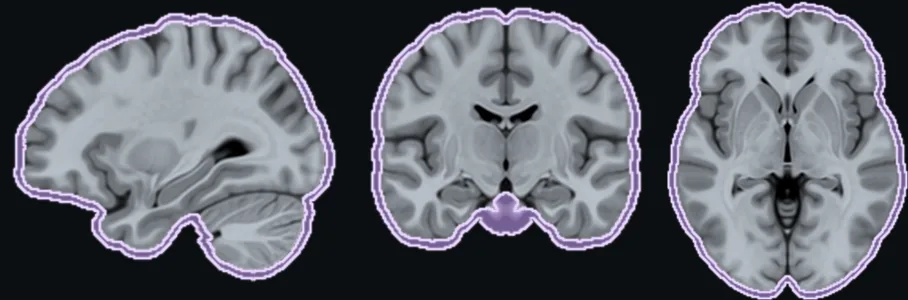
Brain imaging during visual aura has recorded a slow wave of changing activity spreading across the visual cortex at the back of the brain, consistent with cortical spreading depolarisation3,14.
The coverings of the brain and their blood vessels are supplied by trigeminal nerve fibres, the trigeminovascular system, whose activation is central to migraine pain10.
Signs and symptoms
An attack can unfold in phases. Some people notice warning signs hours or days beforehand, such as yawning, food cravings, mood changes or a stiff neck, and tiredness or poor concentration may linger for a day or two afterwards6,7.
- Headache of moderate or severe intensity, often on one side and pulsating or throbbing4.
- Pain made worse by routine physical activity such as walking or climbing stairs4.
- Nausea and/or vomiting4.
- Sensitivity to light and sound4.
- Aura in some people: zigzag lines, flashing lights or blind spots, pins and needles, or difficulty speaking, usually lasting less than an hour6,7.
- In children, attacks are typically shorter and abdominal symptoms more prominent1.
Causes and risk factors
The cause of migraine is not fully understood, but it is regarded as a disorder of brain sensitivity with a strong inherited component, in which both genes and environment play a part3,6. Having a close family member with migraine makes it more likely6.
- Sex and hormones: migraine is more common in females, and attacks may be linked to the menstrual cycle, pregnancy or contraception; many women improve after menopause7.
- Common triggers reported by patients include alcohol, disrupted sleep and certain foods1.
- Stress, tiredness, anxiety and periods are frequently reported triggers6.
- Frequent use of painkillers or triptans can cause medication-overuse headache, the most common secondary headache disorder1,8.
- Migraine often coexists with depression, anxiety, sleep disorders and epilepsy3,7.
Genetics
For most people, migraine is a complex genetic condition: many common gene variants each add a small amount of risk. A genome-wide association study (a scan of the genome across very large groups of people) of more than 100,000 people with migraine identified 123 risk regions, including genes for calcitonin gene-related peptide and the serotonin 1F receptor, both of which are targets of modern migraine medicines5.
Rare single-gene forms also exist. In familial hemiplegic migraine, a form of migraine with aura that includes temporary weakness of one side of the body, disease-causing variants have been identified in the CACNA1A, ATP1A2 and SCN1A genes, which encode ion channels and pumps that regulate nerve cell excitability4.
What happens in the brain
Migraine was once thought to be mainly a disorder of blood vessels, but widening of vessels is now regarded as a secondary phenomenon3. Current models focus on the brain and on the trigeminovascular system, the network of trigeminal nerve fibres that supply sensation to blood vessels and the coverings of the brain10.
Aura is thought to be caused by cortical spreading depolarisation, a slowly advancing wave of intense nerve cell activity followed by suppression that moves across the brain surface; this may also help to trigger activation of trigeminal pain pathways3.
When activated, trigeminal nerves release signalling molecules such as calcitonin gene-related peptide (CGRP) and pituitary adenylate cyclase-activating polypeptide (PACAP), small proteins that dilate blood vessels and promote pain signalling. Infusion of PACAP can provoke attacks in people with migraine, which supports a causal role for these molecules10.
How it is diagnosed
There is no blood test or scan that confirms migraine. Diagnosis is clinical, based on a careful history and examination using internationally agreed criteria4. Keeping a headache diary that records symptoms, timing, medicines and possible triggers can help a doctor identify patterns7.
- For migraine without aura: at least five attacks lasting 4 to 72 hours4.
- The headache has at least two of: one-sided location, pulsating quality, moderate or severe intensity, or worsening with routine activity4.
- During the headache, nausea and/or vomiting, or both light and sound sensitivity4.
- The symptoms are not better explained by another diagnosis4.
- Brain scans are not needed to confirm typical migraine and are used when features suggest another cause: in India, the ICMR Standard Treatment Workflow reserves imaging for atypical symptoms11, and in the United Kingdom NICE advises against scanning solely for reassurance8.
How scientists study it
Very large genetic studies compare hundreds of thousands of people with and without migraine to locate risk variants and to point to biological pathways and drug targets5.
Researchers give carefully controlled infusions of substances such as PACAP to volunteers with migraine to test whether they trigger attacks, which helps establish which molecules drive the disorder10.
Advanced scanning techniques are used to study brain activity and structure before, during and after attacks7.
Studies in animals are used to examine how headache pain pathways work and to screen potential new treatments7.
Placebo-controlled trials test new acute and preventive treatments, for example the trials that established antibodies against the CGRP pathway9.
The Global Burden of Disease study combines population surveys from many countries to estimate how common migraine is and how much disability it causes2.
Current treatments
There is currently no cure for migraine, but many people can reduce how often attacks happen and how severe they are; finding the right approach may take several tries6,7.
Simple painkillers such as ibuprofen, aspirin or paracetamol, and triptans (medicines that act on serotonin receptors, such as sumatriptan), are used, often in combination; anti-sickness medicines can be added8. In the United Kingdom, NICE guidance does not recommend opioids or ergots for acute treatment8.
Gepants, which block the CGRP receptor, and lasmiditan, which acts on the serotonin 1F receptor, are effective acute treatments3.
For frequent attacks, preventive medicines may be considered: in India, the ICMR Standard Treatment Workflow suggests propranolol (a beta-blocker) or flunarizine (a calcium-channel blocker) when attacks occur more than twice a month11, and in the United Kingdom NICE guidance lists propranolol, topiramate (an anti-seizure medicine) and amitriptyline (an antidepressant)8. Topiramate carries particular risks in pregnancy8.
Monoclonal antibodies (laboratory-made antibodies) against CGRP or its receptor, such as erenumab, reduce monthly migraine days compared with placebo9, and two gepants are also effective preventive treatments3.
Injections of onabotulinumtoxinA can help some people with chronic migraine3. Several neuromodulation devices, which deliver electrical or magnetic stimulation to nerves, have been approved, and a course of acupuncture may be considered if preventive medicines are unsuitable3,8.
Regular meals, exercise, sufficient sleep and stress management, together with identifying personal triggers, form part of management6.
Research frontiers
Drugs that block PACAP signalling are being developed; a phase II trial has suggested that an antibody against PACAP can prevent migraine, but this approach remains experimental10.
Newly identified risk genes, some specific to migraine with or without aura, may reveal further treatment targets and explain why patients differ5.
Researchers are studying how to predict migraine episodes more accurately and how conditions such as obesity, depression and poor sleep affect migraine7.
Living with the condition and seeking help
Migraine is usually managed by a general practitioner, with referral to a specialist when attacks are frequent, difficult to treat or atypical. Taking acute treatment early in an attack, avoiding overuse of painkillers and keeping a diary can all help6,8.
Urgent advice should be sought if an attack lasts longer than 72 hours, if aura lasts longer than an hour, or during pregnancy or soon after giving birth6. Emergency help is needed for a sudden, very severe headache, or for headache with symptoms such as weakness on one side, confusion, problems speaking, loss of vision, a seizure, or a very high temperature with signs of meningitis, as these can signal other serious conditions6. In India, the national emergency number is 112 and the ambulance number is 10812,13.
Migraine can affect school, work and family life, and anxiety and depression are more common in people with migraine1. Patient organisations and specialist headache services can provide information and support.
References
- World Health Organization. Headache disorders (fact sheet). Link
- GBD 2016 Headache Collaborators. Global, regional, and national burden of migraine and tension-type headache, 1990-2016: a systematic analysis for the Global Burden of Disease Study 2016. Lancet Neurol. 2018;17:954-976. doi:10.1016/S1474-4422(18)30322-3 · PubMed
- Ferrari MD, Goadsby PJ, Burstein R, et al. Migraine. Nat Rev Dis Primers. 2022;8:2. doi:10.1038/s41572-021-00328-4 · PubMed
- Headache Classification Committee of the International Headache Society. The International Classification of Headache Disorders, 3rd edition. Cephalalgia. 2018;38:1-211. doi:10.1177/0333102417738202 · PubMed
- Hautakangas H, Winsvold BS, Ruotsalainen SE, et al. Genome-wide analysis of 102,084 migraine cases identifies 123 risk loci and subtype-specific risk alleles. Nat Genet. 2022;54:152-160. doi:10.1038/s41588-021-00990-0 · PubMed
- NHS (United Kingdom). Migraine. Link
- National Institute of Neurological Disorders and Stroke (NINDS), United States. Migraine. Link
- National Institute for Health and Care Excellence (NICE), United Kingdom. Headaches in over 12s: diagnosis and management (CG150). Recommendations. Link
- Goadsby PJ, Reuter U, Hallström Y, et al. A controlled trial of erenumab for episodic migraine. N Engl J Med. 2017;377:2123-2132. doi:10.1056/NEJMoa1705848 · PubMed
- Ashina H, Christensen RH, Hay DL, et al. Pituitary adenylate cyclase-activating polypeptide signalling as a therapeutic target in migraine. Nat Rev Neurol. 2024;20:660-670. doi:10.1038/s41582-024-01011-4 · PubMed
- Indian Council of Medical Research and Department of Health Research, Ministry of Health and Family Welfare, Government of India. Standard Treatment Workflows of India, 2019 edition, vol. 1: Neurology (acute paralysis, dementia, epilepsy, headache, neuroinfections, stroke). New Delhi: ICMR; 2019. Link
- Press Information Bureau, Government of India (Ministry of Women and Child Development). Panic button becomes available to women with launch of ERSS and pan-India emergency number 112. 19 February 2019. Link
- National Health Mission, Ministry of Health and Family Welfare, Government of India. ERS/Patient Transport Service: National Ambulance Service (Dial 108/102). Accessed October 2026. Link
- Hadjikhani N, Sanchez del Rio M, Wu O, et al. Mechanisms of migraine aura revealed by functional MRI in human visual cortex. Proc Natl Acad Sci U S A. 2001;98:4687-4692. doi:10.1073/pnas.071582498 · PubMed
Prepared 15 October 2026.
Last updated