Epilepsy
Epilepsy is a long-term brain condition in which a person has an enduring tendency to have seizures, brief episodes caused by bursts of abnormal electrical activity in the brain. It is one of the most common serious neurological conditions worldwide, and most people can become seizure free with the right diagnosis and treatment.
This information is for education. It is not medical advice and does not replace assessment by a qualified health professional. Anyone concerned about symptoms should consult a doctor; in an emergency, local emergency services should be contacted.
What it is
Epilepsy is a chronic non-communicable disease of the brain that affects people of all ages1. A seizure happens when many nerve cells (neurons) send signals at the same time, much faster than normal, temporarily disrupting how the brain works10.
A single seizure does not mean a person has epilepsy: up to 10% of people worldwide have one seizure during their lifetime1. In practice, epilepsy is diagnosed after at least two unprovoked seizures more than 24 hours apart, after one unprovoked seizure when the risk of further seizures is high, or when a recognised epilepsy syndrome is identified4.
New cases are most common in infants and in older people2. Epilepsy has been surrounded by stigma for centuries, and people with epilepsy and their families still face discrimination in many parts of the world1.
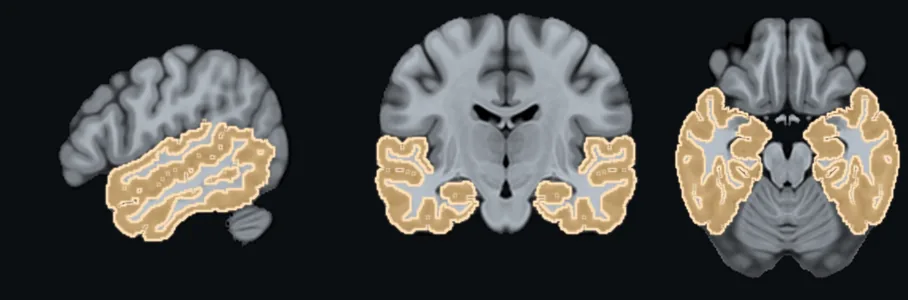
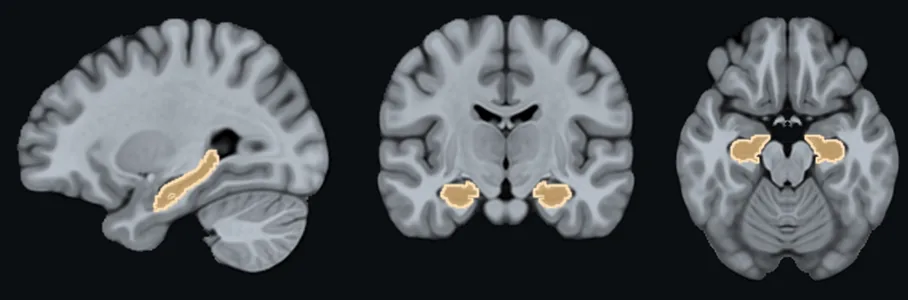
Focal seizures can begin in any part of the cortex. The temporal lobe is the most frequent site in people who need epilepsy surgery, and surgery can control seizures better than continued medicines in temporal lobe epilepsy8,19.
Scarring of the hippocampus (hippocampal sclerosis) was the most common finding in adults who had surgery for drug-resistant focal epilepsy19.
Signs and symptoms
Seizures vary according to where in the brain the abnormal activity starts and how far it spreads1. They are classified as focal (starting in one area of the brain), generalised (involving networks on both sides from the outset) or of unknown onset5.
- Focal seizures with retained awareness: movements of one part of the body, sudden unexplained emotions, or sensations such as smells or tastes that are not real10.
- Focal seizures with impaired awareness: a dream-like state, and repetitive behaviours such as blinking, mouth movements or walking in a circle, called automatisms10.
- Absence seizures: brief episodes of staring into space, sometimes with slight twitching10.
- Tonic-clonic seizures: stiffening of the body followed by rhythmic jerking of the limbs and loss of consciousness10.
- Myoclonic and atonic seizures: sudden jerks, or a sudden loss of muscle tone that can cause falls10.
- After a seizure, people may feel confused, tired or have a headache for some time.
Causes and risk factors
Causes are grouped as structural, genetic, infectious, metabolic, immune and unknown, and no cause is found in about half of people1. Epilepsy is not contagious1.
- Brain injury before or around birth, such as lack of oxygen1.
- Brain malformations and genetic conditions1.
- Severe head injury, stroke and brain tumours1.
- Brain infections such as meningitis, encephalitis or neurocysticercosis (a tapeworm infection of the brain), which contribute to higher rates in low- and middle-income countries1.
- Seizure triggers in people who already have epilepsy include stress, sleep deprivation, alcohol or alcohol withdrawal, missed meals and, for some, flashing lights10.
Genetics
Genetic factors make an important contribution to many epilepsies. More than 500 genes have been associated with epilepsy, which has led to more precise diagnoses and, in some cases, targeted therapies3. Some variants are inherited, while others arise new in the child, known as de novo variants10.
Many single-gene epilepsies involve genes for ion channels, the molecular gates that control the flow of charged particles into and out of nerve cells10. For example, Dravet syndrome, a severe childhood epilepsy, is caused mainly by loss of one working copy of the SCN1A gene, which encodes a sodium channel13.
For common epilepsies, many variants each add a small amount of risk. A genome-wide association study of nearly 30,000 people with epilepsy identified 26 risk regions, with clear differences between the genetic architecture of focal and generalised epilepsies12.
What happens in the brain
Normal brain function depends on a balance between excitatory signals, which make neurons more likely to fire, and inhibitory signals, which calm them; the main excitatory messenger is glutamate and the main inhibitory one is GABA15. A long-standing proposal is that seizures arise when this balance tips, with more glutamate and/or less GABA signalling14. Genetic studies implicate the connections (synapses) of both excitatory and inhibitory neurons in common generalised epilepsies12.
Researchers distinguish epileptogenesis, the gradual process by which an injury or genetic change transforms normal brain circuits into ones prone to seizures, from ictogenesis, the mechanisms that start an individual seizure3. After a head injury or stroke, for example, the brain’s attempts at repair can create abnormal nerve connections that lead to seizures10.
Seizures can affect the brain’s control of breathing, heart rhythm and arousal, which is one reason why they can occasionally be fatal3.
How it is diagnosed
A detailed history and a reliable eyewitness account of the episode are the cornerstones of diagnosis2. Misdiagnosis is common, because fainting and other conditions can resemble seizures3. In India, the ICMR Standard Treatment Workflow advises diagnosis from a detailed eyewitness history in primary care, with referral to a specialist when warning signs are present16; in the United Kingdom, NICE advises that people with a first suspected seizure be seen by a specialist within two weeks9.
- Electroencephalogram (EEG), which records the brain’s electrical activity through scalp electrodes, can support the diagnosis and identify the seizure type, but a normal EEG does not rule out epilepsy9.
- Sleep-deprived or ambulatory (portable, up to 48 hours) EEG may be used if a routine EEG is normal and doubt remains9.
- Video-EEG monitoring, which records seizures on camera alongside the EEG, helps clarify the nature of events10.
- MRI (magnetic resonance imaging) can reveal structural causes such as scarring, malformations or tumours9,10.
- Blood tests check for triggers such as low blood sugar, and genetic or antibody testing may be offered in selected cases9.
How scientists study it
Scalp EEG and, before surgery, electrodes placed inside the brain (stereo-EEG) are used to locate where seizures start10.
Structural MRI finds lesions, while functional MRI, PET (positron emission tomography) and MEG (magnetoencephalography) map brain activity and help plan surgery10.
Gene sequencing and large genome-wide association studies identify causes and risk variants and point to drugs that might be repurposed3,12.
The discovery of epilepsy genes has led to new animal models that are used to study how seizures arise and to test treatments3.
Following large groups of patients for decades shows how well treatments work in practice; a 30-year Glasgow study found that outcomes had not improved despite many new medicines7.
Controlled trials compare medicines, surgery and devices, for example the trial that showed surgery outperforms continued medication in temporal lobe epilepsy8.
Current treatments
Medicines suppress seizures in up to two-thirds of people but do not alter the long-term course of the disorder2. In one long-term cohort, about half became seizure free on the first medicine, and the chance of success fell with each additional medicine tried7.
Epilepsy is considered drug resistant when two appropriate, tolerated medicines have failed to achieve sustained seizure freedom6. About one-third of people continue to have seizures3,7.
Removing the brain area where seizures start is the most effective way to achieve long-term seizure freedom in selected people with drug-resistant focal epilepsy, but it is probably under-used2. In a randomised trial, 58% of surgical patients were free of seizures impairing awareness at one year compared with 8% on medicines8.
Laser interstitial thermal therapy uses heat delivered through a thin probe to destroy the seizure focus and is less invasive than open surgery10.
Vagus nerve stimulation, responsive neurostimulation, which detects and interrupts seizure activity, and deep brain stimulation can reduce seizure frequency10.
The ketogenic diet, which is very low in carbohydrate and high in fat, reduces seizures in some people, especially children, and requires medical supervision10.
Research frontiers
Zorevunersen, an antisense oligonucleotide (a short synthetic strand of genetic material) designed to increase production of the sodium channel lacking in Dravet syndrome, showed encouraging early results in children; it remains experimental13.
Understanding how epilepsy develops, including epigenetic changes (chemical modifications that switch genes on or off), raises hope for treatments that prevent or cure epilepsy rather than only suppress seizures2.
Wearable and implanted devices that detect seizures are moving into clinical use2.
Genetic findings are being used to identify existing medicines that might be effective in epilepsy12.
Living with the condition and seeking help
Most people with epilepsy live full lives. Taking medicines regularly, keeping a seizure diary and having an individual care plan help; risks from bathing, swimming, heights and driving should be discussed with the care team.
Emergency services should be called if someone has a seizure for the first time, if it lasts longer than is usual for them, or longer than five minutes when their usual pattern is unknown11. Status epilepticus, a prolonged seizure or repeated seizures without recovery in between, is a medical emergency10,16. In India, the national emergency number is 112 and the ambulance number is 10817,18.
People with epilepsy have up to three times the risk of premature death of the general population1. Sudden unexpected death in epilepsy (SUDEP) is rare but more frequent when seizures are poorly controlled, and taking medicines as prescribed may reduce the risk10.
References
- World Health Organization. Epilepsy (fact sheet). Link
- Thijs RD, Surges R, O'Brien TJ, Sander JW. Epilepsy in adults. Lancet. 2019;393:689-701. doi:10.1016/S0140-6736(18)32596-0 · PubMed
- Devinsky O, Vezzani A, O'Brien TJ, et al. Epilepsy. Nat Rev Dis Primers. 2018;4:18024. doi:10.1038/nrdp.2018.24 · PubMed
- Fisher RS, Acevedo C, Arzimanoglou A, et al. ILAE official report: a practical clinical definition of epilepsy. Epilepsia. 2014;55:475-482. doi:10.1111/epi.12550 · PubMed
- Fisher RS, Cross JH, French JA, et al. Operational classification of seizure types by the International League Against Epilepsy. Epilepsia. 2017;58:522-530. doi:10.1111/epi.13670 · PubMed
- Kwan P, Arzimanoglou A, Berg AT, et al. Definition of drug resistant epilepsy: consensus proposal by the ad hoc Task Force of the ILAE Commission on Therapeutic Strategies. Epilepsia. 2010;51:1069-1077. doi:10.1111/j.1528-1167.2009.02397.x · PubMed
- Chen Z, Brodie MJ, Liew D, Kwan P. Treatment outcomes in patients with newly diagnosed epilepsy treated with established and new antiepileptic drugs: a 30-year longitudinal cohort study. JAMA Neurol. 2018;75:279-286. doi:10.1001/jamaneurol.2017.3949 · PubMed
- Wiebe S, Blume WT, Girvin JP, Eliasziw M. A randomized, controlled trial of surgery for temporal-lobe epilepsy. N Engl J Med. 2001;345:311-318. doi:10.1056/NEJM200108023450501 · PubMed
- National Institute for Health and Care Excellence (NICE), United Kingdom. Epilepsies in children, young people and adults (NG217). Section 1: Diagnosis and assessment of epilepsy. 2022. Link
- National Institute of Neurological Disorders and Stroke (NINDS), United States. Epilepsy and seizures. Link
- NHS (United Kingdom). Epilepsy. Link
- International League Against Epilepsy Consortium on Complex Epilepsies. GWAS meta-analysis of over 29,000 people with epilepsy identifies 26 risk loci and subtype-specific genetic architecture. Nat Genet. 2023;55:1471-1482. doi:10.1038/s41588-023-01485-w · PubMed
- Laux L, Sullivan J, Perry MS, Brunklaus A, et al. Zorevunersen in children and adolescents with Dravet syndrome. N Engl J Med. 2026;394:969-982. doi:10.1056/NEJMoa2506295 · PubMed
- Sarlo GL, Holton KF. Brain concentrations of glutamate and GABA in human epilepsy: a review. Seizure. 2021;91:213-227. doi:10.1016/j.seizure.2021.06.028 · PubMed
- Schousboe A. Role of astrocytes in the maintenance and modulation of glutamatergic and GABAergic neurotransmission. Neurochem Res. 2003;28:347-352. doi:10.1023/a:1022397704922 · PubMed
- Indian Council of Medical Research and Department of Health Research, Ministry of Health and Family Welfare, Government of India. Standard Treatment Workflows of India, 2019 edition, vol. 1: Neurology (acute paralysis, dementia, epilepsy, headache, neuroinfections, stroke). New Delhi: ICMR; 2019. Link
- Press Information Bureau, Government of India (Ministry of Women and Child Development). Panic button becomes available to women with launch of ERSS and pan-India emergency number 112. 19 February 2019. Link
- National Health Mission, Ministry of Health and Family Welfare, Government of India. ERS/Patient Transport Service: National Ambulance Service (Dial 108/102). Accessed October 2026. Link
- Blümcke I, Spreafico R, Haaker G, et al. Histopathological findings in brain tissue obtained during epilepsy surgery. N Engl J Med. 2017;377:1648-1656. doi:10.1056/NEJMoa1703784 · PubMed
Prepared 15 October 2026.
Last updated