Bipolar disorder
Bipolar disorder is a long-term mental health condition in which a person experiences episodes of depression and periods of abnormally elevated or irritable mood, called mania or the milder hypomania, usually with stable periods in between1,2,11. It cannot be cured, but treatment with medicines, psychological therapy and support helps many people manage it and lead full lives2,11.
This information is for education. It is not medical advice and does not replace assessment by a qualified health professional. Anyone concerned about symptoms should consult a doctor; in an emergency, local emergency services should be contacted.
What it is
Bipolar disorder, formerly called manic depression, causes mood changes that are far more extreme than ordinary ups and downs2. During manic or hypomanic episodes a person may feel elated, irritable or ‘wired’, with greatly increased energy and activity; during depressive episodes they may feel sad, hopeless and unable to function2.
Bipolar disorders affect more than 1% of the world’s population and are among the leading causes of disability in young people3. In a survey of 11 countries, the lifetime prevalence was about 0.6% for bipolar I disorder and 0.4% for bipolar II disorder, with a further 1.4% having milder, subthreshold forms5.
People with bipolar disorder have an increased risk of suicide1. On average they lose an estimated 10-20 years of potential life, mainly through cardiovascular disease and suicide, which makes good physical as well as mental health care important4.
With effective treatment, functioning and quality of life can improve substantially, even in severe forms of the condition2.
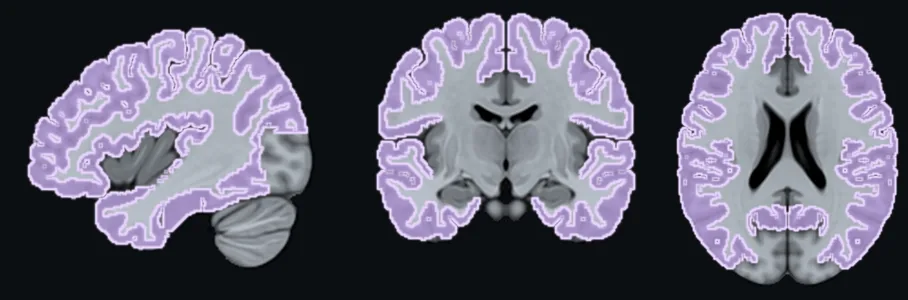
The largest MRI study, of more than 6 500 people, found thinner grey matter in frontal, temporal and parietal regions of the cortex, with greater thinning in people who had been ill for longer9.
Signs and symptoms
Mood episodes usually last days to weeks, and many people have long periods of stable mood between them2,11. Some episodes have mixed features, with manic and depressive symptoms at the same time2.
- Elevated, euphoric or very irritable mood during mania or hypomania1,2
- Greatly increased energy and activity, and a reduced need for sleep1,2
- Racing thoughts, rapid speech and jumping between topics (‘flight of ideas’)2
- Inflated self-esteem, feeling unusually important or powerful, and impulsive or reckless behaviour such as overspending1,11
- During depression: low mood, loss of interest, low energy, hopelessness and difficulty concentrating1,2
- Thoughts of death, suicide or self-harm, particularly during depressive episodes2,11
- In severe episodes, psychotic symptoms such as hallucinations (perceiving things that are not there) or delusions (fixed false beliefs) that tend to match the mood2
Causes and risk factors
The exact cause of bipolar disorder is unknown. It is thought to arise from an interaction between genetic vulnerability and environmental factors2,3.
Childhood maltreatment is common in people with bipolar disorder and is associated with a more complex course, including suicidal behaviour4. Other mental health conditions frequently occur alongside it, especially anxiety disorders2,5.
- A parent or sibling with bipolar disorder, although most relatives do not develop it2
- Trauma or major stressful life events in people with genetic vulnerability2
- Disrupted sleep, stress and being overly busy, which can trigger episodes11
- Recreational drug use and heavy alcohol use, which can worsen or mimic mood symptoms2,11
- Treatment of depression with an antidepressant alone, which can trigger mania or rapid cycling in people with bipolar disorder2
Genetics
Bipolar disorder is among the most heritable psychiatric conditions, with an estimated heritability of about 70%3,4. Even so, identical twins do not always both develop it, showing that genes are not the whole story2.
Many genes are involved, and no single gene causes bipolar disorder2. A genome-wide association study (GWAS) of more than 40 000 people with bipolar disorder and over 370 000 controls identified 64 genomic regions associated with the condition6.
Bipolar disorder shares genetic risk with other conditions. Bipolar I disorder is genetically closer to schizophrenia, whereas bipolar II disorder is closer to major depression4.
What happens in the brain
How bipolar disorder arises in the brain is not yet understood4. Proposed processes include disturbances in neuronal-glial plasticity (how nerve cells and their support cells adapt), monoamine signalling such as dopamine and serotonin, inflammation, cell metabolism and the function of mitochondria, the energy-producing structures in cells4.
Brain imaging shows differences at a group level. The largest MRI study, of more than 6 500 people, found thinner grey matter in frontal, temporal and parietal regions of the cortex in people with bipolar disorder, with greater thinning in those who had been ill for longer9.
Nerve cells grown from the stem cells of people with bipolar disorder were found to be unusually excitable, and lithium reduced this only in cells from people who responded to lithium clinically8. Such findings are early but suggest that differences in nerve-cell excitability may be part of the condition.
How it is diagnosed
There is no specific biological test for bipolar disorder, so diagnosis relies on careful clinical assessment by a mental health specialist, often a psychiatrist3,11. It is based on the severity, length and frequency of symptoms over a person’s lifetime, together with their family history2.
Diagnosis can take years, because people often seek help only during depression and hypomanic episodes may go unnoticed, and because symptoms can resemble other conditions2,3.
- Bipolar I disorder: at least one manic episode lasting at least 7 days, or severe enough to need hospital care2
- Bipolar II disorder: depressive episodes with hypomanic episodes that are less severe than full mania2
- Cyclothymic disorder: recurring hypomanic and depressive symptoms that do not meet the criteria for full episodes2
- Physical examination and tests to rule out other causes, such as thyroid disease or the effects of medicines or drugs2
- Distinguishing bipolar disorder from unipolar depression, and from schizophrenia when psychotic symptoms are present2,3
How scientists study it
International consortia compare the DNA of tens of thousands of people with and without bipolar disorder to find risk variants and shared genetic links with other conditions4,6.
Groups such as the ENIGMA Bipolar Disorder Working Group pool MRI scans from many sites to detect reliable differences in cortical thickness and brain structure, and the effects of medicines9.
Skin or blood cells from patients can be reprogrammed into induced pluripotent stem cells and turned into nerve cells, to study cell behaviour and responses to lithium8.
Large international surveys using standardised interviews measure how common bipolar disorder is, how it affects people and how often they receive treatment5.
Randomised trials, combined in meta-analyses, test whether treatments such as lithium prevent relapse and reduce suicide7.
Researchers examine inflammation, mitochondrial function and cell metabolism in people with bipolar disorder to understand the biology of mood episodes4.
Current treatments
There is no cure, but long-term treatment helps prevent episodes2,11. For mania, Indian Psychiatric Society guidelines list lithium, divalproex and several antipsychotics as first-line options12. In the United Kingdom, NICE recommends lithium as the first-line long-term medicine; it needs regular blood monitoring, including kidney and thyroid function10. Valproate is also used, but NICE directs prescribers to specific safety advice, particularly for women and girls and for people under 552,10.
A meta-analysis of randomised trials found that lithium reduced the number of suicides and deaths from any cause in people with mood disorders compared with placebo7.
Antipsychotics such as haloperidol, olanzapine, quetiapine or risperidone are used to treat mania or hypomania, and some are also used for bipolar depression2,10.
Antidepressants are not used on their own in bipolar disorder because they can trigger mania or rapid cycling; they may sometimes be added to a mood stabiliser2.
Therapies developed specifically for bipolar disorder, including family-focused therapy and interpersonal and social rhythm therapy (which works with daily routines and sleep-wake rhythms), as well as cognitive behavioural therapy (CBT), can help alongside medicine2,10.
Electroconvulsive therapy (ECT) may be used for severe symptoms that have not responded to other treatments, or when a rapid response is needed2.
If there is a risk of self-harm, suicide or harm to others, a person may need hospital treatment or support from a home-based crisis team11.
Research frontiers
Only some people respond well to lithium, and stem-cell studies are searching for cellular markers that could predict who will benefit8.
No specific biomarkers are yet available; finding them could shorten the long delay before diagnosis3.
Inflammation, mitochondrial function and neuronal-glial plasticity are being investigated as possible targets for new treatments4.
Genetic overlap with schizophrenia and depression is helping researchers understand how psychiatric conditions relate to one another4,6.
Research into the high rates of cardiovascular disease aims to close the gap in life expectancy between people with bipolar disorder and the general population4.
Living with the condition and seeking help
Extreme mood changes that last a long time or affect everyday life should be assessed by a doctor, and a person who is worried about someone else can encourage them to seek the same help11. Prescribed medicine should not be stopped without medical advice, even when the person feels well, and medicines should be discussed with a doctor before or during pregnancy11.
Regular routines, enough sleep, healthy eating, exercise and managing stress can help keep moods stable, while avoiding recreational drugs, excess alcohol and caffeine, and disrupted sleep patterns where possible11. Knowing personal triggers, such as stress, lack of sleep or being too busy, can help people act early11.
If someone is having a mental health crisis, is thinking about suicide, or may harm themselves or others, local emergency services or a crisis line should be contacted straight away, or the person should go to the nearest emergency department. In India, emergency help is available on 11213, and Tele-MANAS, the national tele-mental health service, offers free support at all hours on 1441614.
References
- World Health Organization. Mental disorders (fact sheet). 11 September 2026. Link
- National Institute of Mental Health, United States. Bipolar disorder (NIH publication). Revised 2025. Link
- Vieta E, Berk M, Schulze TG, et al. Bipolar disorders. Nat Rev Dis Primers. 2018;4:18008. doi:10.1038/nrdp.2018.8 · PubMed
- McIntyre RS, Berk M, Brietzke E, et al. Bipolar disorders. Lancet. 2020;396:1841-1856. doi:10.1016/S0140-6736(20)31544-0 · PubMed
- Merikangas KR, Jin R, He JP, et al. Prevalence and correlates of bipolar spectrum disorder in the World Mental Health Survey Initiative. Arch Gen Psychiatry. 2011;68:241-251. doi:10.1001/archgenpsychiatry.2011.12 · PubMed
- Mullins N, Forstner AJ, O'Connell KS, et al. Genome-wide association study of more than 40,000 bipolar disorder cases provides new insights into the underlying biology. Nat Genet. 2021;53:817-829. doi:10.1038/s41588-021-00857-4 · PubMed
- Cipriani A, Hawton K, Stockton S, Geddes JR. Lithium in the prevention of suicide in mood disorders: updated systematic review and meta-analysis. BMJ. 2013;346:f3646. doi:10.1136/bmj.f3646 · PubMed
- Mertens J, Wang QW, Kim Y, et al. Differential responses to lithium in hyperexcitable neurons from patients with bipolar disorder. Nature. 2015;527:95-99. doi:10.1038/nature15526 · PubMed
- Hibar DP, Westlye LT, Doan NT, et al. Cortical abnormalities in bipolar disorder: an MRI analysis of 6503 individuals from the ENIGMA Bipolar Disorder Working Group. Mol Psychiatry. 2018;23:932-942. doi:10.1038/mp.2017.73 · PubMed
- National Institute for Health and Care Excellence (NICE), United Kingdom. Bipolar disorder: assessment and management (CG185). Recommendations. 2014, updated 2025. Link
- NHS (United Kingdom). Bipolar disorder. Page last reviewed 28 October 2024. Link
- Menon V, Ganesh R, Deep R, et al. Clinical practice guidelines for the management of bipolar disorder: 2025 update. Indian J Psychiatry. 2026;68(1):8-43. doi:10.4103/indianjpsychiatry_1186_25 · PubMed
- Press Information Bureau, Government of India (Ministry of Women and Child Development). Panic button becomes available to women with launch of ERSS and pan-India emergency number 112. 19 February 2019. Link
- Press Information Bureau, Government of India (Ministry of Health and Family Welfare). Update on National Tele Mental Health Programme (NTMHP). 4 April 2025. Link
Prepared 15 October 2026.
Last updated