Stroke
A stroke happens when the blood supply to part of the brain is suddenly blocked or a blood vessel in the brain bursts, so that brain cells are starved of oxygen and begin to die. It is a medical emergency and one of the world’s leading causes of death and disability, but fast treatment and good prevention greatly improve outcomes.
This information is for education. It is not medical advice and does not replace assessment by a qualified health professional. Anyone concerned about symptoms should consult a doctor; in an emergency, local emergency services should be contacted.
What it is
A stroke can affect movement, speech, vision, thinking and emotions, and may be life-threatening9.
There are two main types. In an ischaemic stroke, a blood clot or narrowed artery blocks blood flow; this accounted for about 65% of new strokes worldwide in 20211. In a haemorrhagic stroke, a blood vessel bursts, either within the brain (intracerebral haemorrhage, about 29%) or into the space around it (subarachnoid haemorrhage, about 6%)1.
A transient ischaemic attack (TIA), sometimes called a mini-stroke, causes stroke symptoms that resolve quickly but is a warning sign that needs urgent assessment8,9. In 2021 there were about 94 million people living after a stroke, and the global burden has grown since 19901.
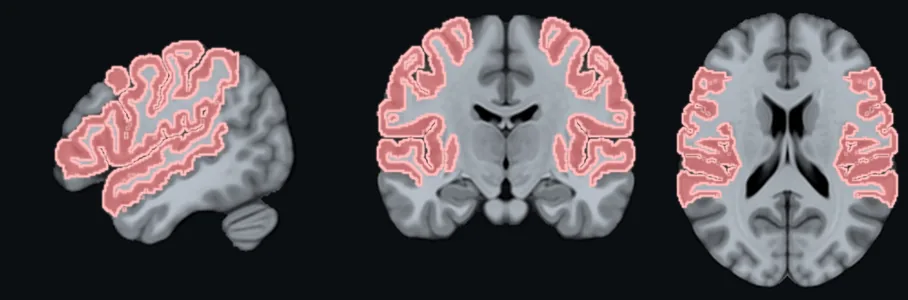
Approximate area supplied by the middle cerebral artery, which serves much of the outer surface of the frontal, parietal and temporal lobes and, through small branches, deep structures. A blocked artery leaves a core of dying tissue surrounded by a penumbra that can still be saved if blood flow returns in time2.
Signs and symptoms
Stroke symptoms start suddenly. The FAST test helps people recognise the most common signs: Face, Arms, Speech, Time to call emergency services9.
- Face: one side of the face may droop and it may be hard to smile9.
- Arms: weakness or numbness in one arm, so both cannot be lifted and held up9.
- Speech: slurred or confused speech, or difficulty finding words9.
- Weakness or numbness down one side of the body9.
- Blurred vision or loss of sight in one or both eyes9.
- Dizziness, loss of balance, confusion, a sudden severe headache, or nausea and vomiting9.
Causes and risk factors
Ischaemic strokes are usually caused by clots that form on fatty deposits in arteries (atherosclerosis), travel from the heart, or block small vessels deep in the brain2. High blood pressure is especially strongly associated with intracerebral haemorrhage and is its most common cause3,16. An international study in 32 countries found that ten potentially modifiable risk factors together accounted for about 90% of the population risk of stroke, consistently across regions, sexes and ages3.
- High blood pressure, the most important single factor, associated with nearly half of stroke risk in that study3.
- Physical inactivity, unhealthy diet, abdominal obesity and an unfavourable blood fat profile3.
- Smoking, high alcohol intake and psychosocial stress3.
- Heart conditions, including atrial fibrillation, an irregular heart rhythm that allows clots to form in the heart, and diabetes2,3.
- Age over 50, a previous stroke or TIA, sickle cell disease, and Black or South Asian background10.
- Rising burdens from high body mass index, high blood sugar and air pollution have been reported globally1.
Genetics
Most strokes result from the combined effects of many common genetic variants together with lifestyle and vascular risk factors. A cross-ancestry genome-wide association study of more than 110,000 people who had had a stroke identified 89 risk regions and highlighted possible drug targets12.
Genetic risk scores built from these findings can help predict ischaemic stroke, but they are not yet used routinely in clinical care12.
A small proportion of strokes have a single-gene cause. The most common heritable cause of stroke in adults is CADASIL, caused by variants in the NOTCH3 gene; it leads to damage of small arteries, early strokes, migraine with aura and vascular dementia13.
What happens in the brain
The brain depends on a continuous supply of oxygen and glucose. When an artery is blocked, a core of tissue dies rapidly, while a surrounding region, the penumbra, is starved of blood but can still be saved if blood flow is restored in time2.
In a typical large ischaemic stroke, an estimated 1.9 million neurons are lost each minute without treatment, which is why the phrase “time is brain” is used4.
In haemorrhagic stroke, blood leaking into or around the brain damages tissue directly and raises pressure inside the skull16. The type of stroke must be identified before treatment because clot-dissolving medicines would worsen bleeding8.
How it is diagnosed
In India, the ICMR Standard Treatment Workflow advises rapid transfer to the nearest hospital with a CT scanner or to a stroke centre able to give thrombolysis17. Stroke is diagnosed from the sudden onset of symptoms and an urgent clinical assessment, often using validated recognition tools in the emergency department8. Low blood sugar, which can mimic stroke, must be excluded8.
- Immediate brain imaging, usually a CT (computed tomography) scan, distinguishes bleeding from blockage and identifies people who may benefit from clot-removing treatment8.
- CT or MR angiography, which shows the blood vessels, confirms large artery blockages suitable for thrombectomy8.
- Perfusion imaging, which shows blood flow, can identify salvageable brain tissue in people seen later or who wake with symptoms2,8.
- MRI is used for many people with suspected TIA8.
- Heart tests such as an electrocardiogram (ECG) look for atrial fibrillation, and ultrasound scans can examine blood vessels in and around the brain9.
How scientists study it
Trials and pooled analyses of trials established clot-dissolving medicines and thrombectomy, and defined their time windows and benefits5,6.
CT and MRI perfusion techniques are used to estimate how much tissue can be saved and to select patients for treatment beyond standard time limits2.
Genome-wide association studies across ancestries identify risk genes and possible drug targets, and support risk prediction12.
Comparing people with stroke and matched controls across many countries quantifies which risk factors matter most in different regions3.
The Global Burden of Disease study estimates stroke incidence, deaths and disability in 204 countries and tracks trends over time1.
Current treatments
Clot-dissolving medicines such as alteplase or tenecteplase, given into a vein within 4.5 hours of onset once bleeding has been excluded, improve the chance of a good recovery, with greater benefit the earlier they are given5,8. They carry a risk of bleeding in the brain5.
Mechanical removal of a clot from a large artery through a catheter greatly reduces disability6. In the United Kingdom, NICE guidance offers it within 6 hours, and up to 24 hours in selected people whose imaging shows salvageable tissue8.
Care from a specialist multidisciplinary team on a dedicated stroke ward makes people more likely to be alive, independent and living at home a year later7.
For intracerebral haemorrhage, rapid lowering of blood pressure is considered in many people, and surgery may be needed to relieve pressure or drain fluid8,9.
Long-term prevention includes blood pressure control, cholesterol-lowering statins, antiplatelet medicines, anticoagulants for atrial fibrillation and, for severe narrowing of a neck artery, carotid endarterectomy (surgery to clear the artery)2.
Physiotherapy, speech and language therapy, occupational therapy, cognitive rehabilitation and psychological support help people regain function; recovery may take weeks to years11. There is no treatment that reverses brain tissue that has already died, so speed and rehabilitation are central.
Research frontiers
Tenecteplase, given as a single injection, was shown to be a reasonable alternative to the longer alteplase infusion in a large trial15.
Ambulances equipped with a CT scanner allow treatment to start before reaching hospital; in a multicentre study they shortened time to treatment and improved outcomes14.
Advanced imaging is being used to extend treatment to people seen late or who wake with symptoms2.
Genetic studies point to proteins involved in clotting and blood vessel biology as potential new drug targets, some of which are already under investigation12.
Living with the condition and seeking help
Emergency services should be called immediately if a stroke is suspected, even if the symptoms seem to have stopped, and the person should not be driven to hospital by car9. In India, the national emergency number is 112 and the ambulance number is 10818,19. Rapid treatment saves brain tissue and lives4,5.
Recovery varies widely. After discharge, a home recovery plan may include physiotherapy, therapy for speech, swallowing and vision, and support for anxiety, depression and fatigue, with a review of progress after about six months11.
Carers play a major part in recovery and should seek support for themselves11. Most strokes are linked to modifiable risks, so stopping smoking, staying active, eating well and treating high blood pressure reduce the chance of a first or repeat stroke3.
References
- GBD 2021 Stroke Risk Factor Collaborators. Global, regional, and national burden of stroke and its risk factors, 1990-2021: a systematic analysis for the Global Burden of Disease Study 2021. Lancet Neurol. 2024;23:973-1003. doi:10.1016/S1474-4422(24)00369-7 · PubMed
- Campbell BCV, De Silva DA, Macleod MR, et al. Ischaemic stroke. Nat Rev Dis Primers. 2019;5:70. doi:10.1038/s41572-019-0118-8 · PubMed
- O'Donnell MJ, Chin SL, Rangarajan S, et al. Global and regional effects of potentially modifiable risk factors associated with acute stroke in 32 countries (INTERSTROKE): a case-control study. Lancet. 2016;388:761-775. doi:10.1016/S0140-6736(16)30506-2 · PubMed
- Saver JL. Time is brain--quantified. Stroke. 2006;37:263-266. doi:10.1161/01.STR.0000196957.55928.ab · PubMed
- Emberson J, Lees KR, Lyden P, et al. Effect of treatment delay, age, and stroke severity on the effects of intravenous thrombolysis with alteplase for acute ischaemic stroke: a meta-analysis of individual patient data from randomised trials. Lancet. 2014;384:1929-1935. doi:10.1016/S0140-6736(14)60584-5 · PubMed
- Goyal M, Menon BK, van Zwam WH, et al. Endovascular thrombectomy after large-vessel ischaemic stroke: a meta-analysis of individual patient data from five randomised trials. Lancet. 2016;387:1723-1731. doi:10.1016/S0140-6736(16)00163-X · PubMed
- Stroke Unit Trialists' Collaboration. Organised inpatient (stroke unit) care for stroke. Cochrane Database Syst Rev. 2013;(9):CD000197. doi:10.1002/14651858.CD000197.pub3 · PubMed
- National Institute for Health and Care Excellence (NICE), United Kingdom. Stroke and transient ischaemic attack in over 16s: diagnosis and initial management (NG128). Recommendations. Link
- NHS (United Kingdom). Stroke (overview, symptoms, diagnosis and treatment pages). Link
- NHS (United Kingdom). Causes of a stroke. Link
- NHS (United Kingdom). Recovering from a stroke. Link
- Mishra A, Malik R, Hachiya T, et al. Stroke genetics informs drug discovery and risk prediction across ancestries. Nature. 2022;611:115-123. doi:10.1038/s41586-022-05165-3 · PubMed
- Chabriat H, Joutel A, Dichgans M, Tournier-Lasserve E, Bousser MG. Cadasil. Lancet Neurol. 2009;8:643-653. doi:10.1016/S1474-4422(09)70127-9 · PubMed
- Grotta JC, Yamal JM, Parker SA, et al. Prospective, multicenter, controlled trial of mobile stroke units. N Engl J Med. 2021;385:971-981. doi:10.1056/NEJMoa2103879 · PubMed
- Menon BK, Buck BH, Singh N, et al. Intravenous tenecteplase compared with alteplase for acute ischaemic stroke in Canada (AcT): a pragmatic, multicentre, open-label, registry-linked, randomised, controlled, non-inferiority trial. Lancet. 2022;400:161-169. doi:10.1016/S0140-6736(22)01054-6 · PubMed
- Keep RF, Hua Y, Xi G. Intracerebral haemorrhage: mechanisms of injury and therapeutic targets. Lancet Neurol. 2012;11:720-731. doi:10.1016/S1474-4422(12)70104-7 · PubMed
- Indian Council of Medical Research and Department of Health Research, Ministry of Health and Family Welfare, Government of India. Standard Treatment Workflows of India, 2019 edition, vol. 1: Neurology (acute paralysis, dementia, epilepsy, headache, neuroinfections, stroke). New Delhi: ICMR; 2019. Link
- Press Information Bureau, Government of India (Ministry of Women and Child Development). Panic button becomes available to women with launch of ERSS and pan-India emergency number 112. 19 February 2019. Link
- National Health Mission, Ministry of Health and Family Welfare, Government of India. ERS/Patient Transport Service: National Ambulance Service (Dial 108/102). Accessed October 2026. Link
Prepared 15 October 2026.
Last updated